 DESIGNED BY RIDERS, FOR RIDERS
Every Beginner Should Know About Horses Before Their First Ride

Entering the world of equestrian sport is an exciting journey, but true confidence in the saddle begins long before you put your foot in the stirrup. Understanding the fundamental nature of horses, how they perceive their environment, communicate their emotions, and process human interactions is the foundation of every safe and rewarding partnership. Horses are not motorized vehicles or predictable machines; they are highly intuitive, sensitive animals with deeply ingrained natural instincts that shape their everyday behavior.
Whether you are preparing for your very first riding lesson or returning to the barn after a long break, taking time to learn equine psychology is essential. Variables such as herd dynamics, subtle changes in ear position, and environmental triggers all dictate how a horse reacts to your presence. Because different situations call for distinct handling techniques; approaching a calm horse, recognizing signs of anxiety, and establishing trust require specific awareness and clear body language.
By building a strong foundation in equine behavior and understanding how horses interact with the world around them, you can approach your first ride with confidence, empathy, and complete peace of mind.
How Horses Think: What It Means to Be a Prey and Herd Animal
To understand why a horse acts the way it does, you must first recognize that their entire evolutionary history is built on survival as a prey animal. Unlike predators, which rely on aggression and hunting tactics, horses have evolved over millions of years to run away from potential threats. This fundamental survival mechanism means that horses are hyper-aware of their surroundings and naturally inclined to seek safety in numbers through strong herd structures.
The Flight Response over Fight: When faced with an unfamiliar object, a sudden noise, or a quick movement, a horse's default instinct is flight. Their brain processes potential danger instantly, choosing to create distance before stopping to analyze the situation. As a beginner, understanding this natural flight instinct helps you realize that a horse's sudden startle or step sideways is rarely malicious; it is simply an automatic self-preservation response.
The Security of the Herd: In the wild, living in a herd offers protection, as multiple eyes and ears are constantly monitoring the environment for predators. Domestic horses retain this strong herd mentality, looking to their herd mates and their human handlers for reassurance and leadership. When you step into a horse's space with calm, steady confidence, you assume the role of a trusted leader, helping the horse feel secure in your presence.
Hierarchy and Social Order: Every herd operates on a clear social structure established through subtle body language, space control, and mutual respect. Horses constantly evaluate who is directing movement within their personal bubble. By maintaining clear boundaries, using consistent cues, and remaining patient during groundwork, you establish a harmonious relationship based on mutual trust rather than force.
Reading Horse Body Language: Ears, Tail, Eyes & Posture
Horses communicate continuously through a sophisticated language of micro-movements, facial expressions, and overall body posture. Because they do not use spoken words, learning to read these subtle visual signals is the most effective way to gauge a horse's mood, focus, and energy levels before you step into their space.
Ear Signals and Attention Direction: A horse's ears are one of the most reliable indicators of their immediate focus and emotional state. Ears pinned flat back against the neck signal frustration, dominance, or anger, warning you to give the horse space. Conversely, ears turned forward show curiosity and interest, while ears that swivel back and forth indicate that the horse is actively listening to both you and their surrounding environment.
Eyes, Muzzle, and Facial Expressions: The expression around a horse's eyes and mouth provides deep insight into their internal state. Soft, relaxed eyes with loose, drooping lips indicate contentment and calm. On the other hand, wide eyes showing white sclera, accompanied by tight, wrinkled nostrils and a clenched jaw, are clear indicators of tension, fear, or heightened alertness.
Tail Movement and Body Posture: A relaxed, gently swaying tail reflects a comfortable horse, whereas a tail wringing aggressively or tucked tightly against the hindquarters suggests annoyance or extreme anxiety. Pay close attention to overall muscle tone; a soft, low-set head posture signals relaxation, while a raised neck with rigid, hollow back muscles indicates that the horse is on high alert.
The Five Senses of a Horse: Why They React the Way They Do
A horse experiences the world through sensory systems that are vast, specialized, and significantly different from human senses. Understanding these sensory differences explains why a horse might spook at something that seems entirely harmless to a human handler.
Wide-Angle Vision with Blind Spots: Because a horse's eyes are positioned on the sides of its head, they possess a vast monocular field of view spanning nearly 350 degrees. However, they have two distinct blind spots: directly in front of their nose and directly behind their tail. Approaching a horse within these blind spots can startle them, so always make soft vocal contact and approach toward their shoulder where they can see you clearly.
Exceptional Hearing and Sound Sensitivity: A horse's ears can rotate independently up to 180 degrees, allowing them to pinpoint sounds from great distances without moving their head. Their hearing is far more sensitive to high-frequency sounds than human hearing. Sudden sharp noises such as a crinkling plastic bag, a sudden shout, or Velcro snapping can cause an immediate fear response before the horse even identifies the source.
Sensitivity to Touch and Pressure: A horse's skin is extraordinarily sensitive, capable of feeling the landing of a single fly. They respond instantly to subtle changes in physical pressure, weight distribution, and handling tension. For beginners, learning correct leg alignment, soft hand contact, and balanced seat position is critical for giving clear, comfortable cues. To discover how proper posture and balanced gear work together, read our detailed guide on horse riding tips posture balance gear alignment.
How to Approach and Touch a Horse for the First Time
Making a positive first impression sets the tone for your entire interaction with a horse. Approaching with the right posture and touch builds immediate trust, ensuring that the horse feels safe and respected from the very beginning.
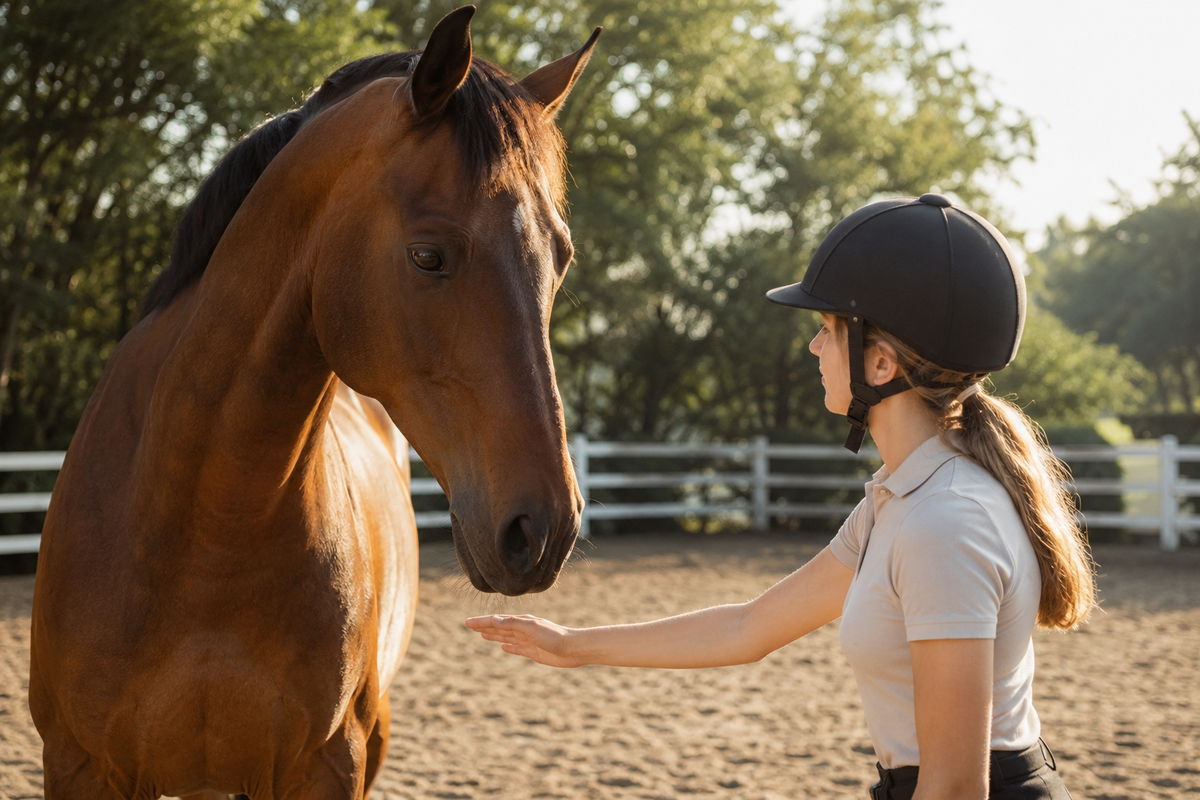
Approaching at an Angle with Calm Energy: Never walk straight toward a horse's face or directly behind their hindquarters. Instead, walk at a gentle angle toward their left or right shoulder, keeping your movements deliberate, soft, and unhurried. Speak in a calm, low tone as you approach so the horse is fully aware of your presence before you step into their personal space.
Offering a Gentle Greeting: Once you reach the horse's shoulder, pause and allow them to initiate contact. Extend the back of your hand slightly so they can smell you, mimicking the natural way horses greet one another in the herd. Avoid rushing directly to pat their forehead or ears, as many horses are protective of their face and prefer a slow, respectful greeting.
Proper Stroking vs. Tapping: Horses generally dislike sharp, quick patting on their face or neck, which can feel aggressive or startling. Instead, use firm, smooth stroking motions along their neck and shoulder. Deep, rhythmic rubbing mimics natural mutual grooming, releasing endorphins that help the horse lower its heart rate and relax into your touch.
A Horse's Daily Routine: Feeding, Grooming & Social Needs
Understanding what a horse requires to remain healthy, happy, and mentally balanced gives you a broader appreciation for their daily life beyond riding time. A well-managed daily routine is essential for preventing behavioral issues, metabolic stress, and barn anxiety.
Forage-Based Digestion: Horses are trickle feeders designed by nature to graze continuously for 16 to 18 hours a day. Their digestive system produces stomach acid constantly, requiring a steady supply of high-fiber forage such as hay or grass to maintain gut health and prevent painful ulcers. Providing constant access to clean water and fiber keeps their digestive tract functioning smoothly.
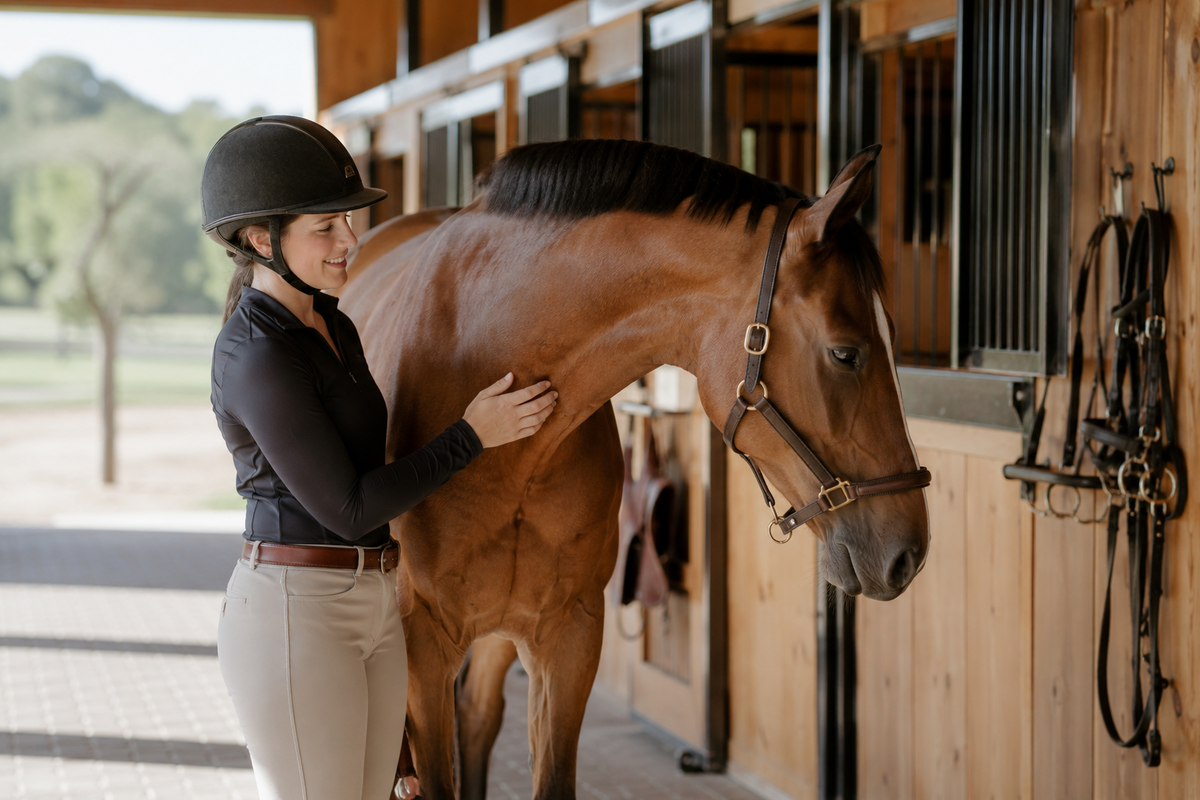
Grooming as Bonding and Health Inspection: Grooming is far more than an aesthetic ritual; it is a vital daily health check and a powerful bonding opportunity. Using curry combs and soft brushes removes dirt, stimulates skin circulation, and allows you to inspect the horse's body for swelling, cuts, or heat spots. Cleaning out the hooves before and after every ride prevents stone bruises and thrush infections.
Social Interaction and Turnout Time: Horses require regular daily turnout in pastures or paddocks to run, stretch their muscles, and socialize with herd mates. Isolation and prolonged stall confinement can lead to boredom and stable vices such as cribbing, weaving, or stall pacing. A horse that enjoys ample turnout time is naturally calmer, more focused, and far more cooperative during lessons.
Fear and Stress Signals: When to Step Back and Listen
Even the calmest lesson horse can experience moments of stress, fear, or physical overload. Recognizing when a horse is uncomfortable allows you to diffuse tension safely before it leads to dangerous behavior or a loss of control.
Recognizing Early Stress Indicators: Signs of elevated stress include rapid tail swishing, high head carriage, flared nostrils, stomping feet, and frequent, nervous defecation. If a horse becomes rigid and refuses to move forward, forcing the issue with aggressive pressure will only escalate their anxiety. Pausing, taking a deep breath, and giving the horse time to process their surroundings is often the safest path forward.
Knowing When to Give Space: If a horse displays extreme fear signals such as pinning its ears flat, raising its hind leg menacingly, or showing whites in its eyes while backing away rapidly, step back safely out of striking distance. Never attempt to force a terrified horse into a tight space or corner. Giving them room to breathe while seeking assistance from an experienced instructor prevents accidents and keeps both handler and horse safe.
Building Confidence Through Consistency: Overcoming fear requires patience, repetition, and clear boundaries. Horses thrive when handled with a quiet, predictable demeanor. When you remain grounded and consistent in your cues, the horse learns that they can rely on your guidance, transforming anxiety into a relaxed, cooperative partnership. To ensure you have the right apparel and gear for a confident start, explore our curated shop the look collection.
Trust the Power of Understanding Your Horse
Developing a strong bond with a horse is a rewarding journey rooted in patience, observation, and deep respect for equine nature. By learning to read body language, understanding prey instincts, and approaching every interaction with calm consistency, you lay the groundwork for a safe and successful riding experience.
As you prepare for your first ride, take time to observe the horses around the barn. How do they interact with each other? How do their ears move when someone speaks to them? How do they react to daily stable sounds? The answers to these simple observations will become your most reliable guide as you develop your skills as a horseperson.
By prioritizing clear communication and empathetic handling, you transform a simple riding lesson into a true partnership. Every step you take to understand the horse's perspective brings you closer to becoming a confident, balanced, and compassionate equestrian.
Editor’s Note: Always wear an approved safety helmet and sturdy, heel-soled boots whenever handling or riding horses, regardless of how calm or experienced the horse may seem. Safety equipment is your essential protective layer while you build your ground handling skills and riding confidence.


Related Post

Equestrian Riding Socks Guide
Discover how to choose the best equestrian riding socks for summer — breathable fabrics, blister prevention, the right length for breeches.

Equestrian Breeches Guide: How to Choose the Right Riding Breeches for Your Discipline
From full-seat to knee-patch, silicone grip to technical fabric, discover how to choose the right riding breeches for your discipline and summer riding.


