 DESIGNED BY RIDERS, FOR RIDERS
How to Groom a Horse: A Step-by-Step Guide for Equine Health and Performance

Grooming is far more than an aesthetic chore designed to create a glossy coat for the show ring; it is the cornerstone of responsible horsemanship. While general equine routines touch briefly on hygiene as outlined in our broader guide on horse care tips for first time owners a dedicated grooming regimen operates as an essential daily health audit. It stimulates blood circulation, distributes vital natural oils through the hair follicles, and fosters deep mental connection between horse and handler.
Most critically, grooming provides your frontline defense against injury and dermatological issues. Running your hands and brushes across every contour of the horse's body allows you to detect localized heat, subtle swelling, minor cuts, embedded ticks, or developing skin sensitivities long before they compromise athletic soundness. Mastering the exact sequence of brushes, understanding skin pressure limits, and knowing where tactile care impacts tack placement ensures your horse remains comfortable, confident, and physically prepared for work under saddle.
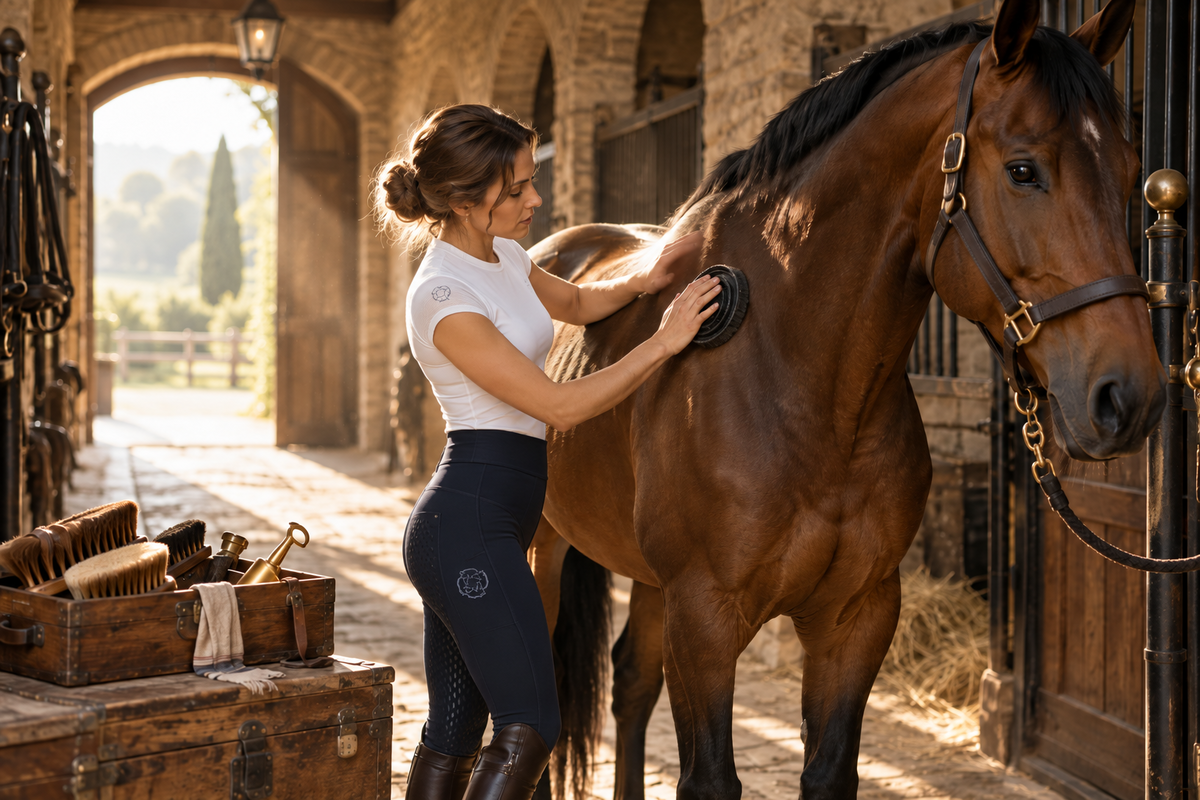
Why Regular Horse Grooming Matters
A dedicated daily grooming routine functions on multiple physiological and psychological levels, impacting everything from muscular health to equine behavior.
Circulatory Stimulation and Natural Coat Conditioning: The rhythmic mechanical action of firm brushing massages the horse's subcutaneous tissues, dilating surface blood vessels and boosting circulation. This mechanical motion stimulates the sebaceous glands nestled at the root of each hair shaft, releasing natural sebum. As you brush in structured strokes, you distribute these protective oils across the coat, creating a natural water-repellent barrier and an unmistakable, healthy shine that no silicone-based shine spray can duplicate.
Tactile Health Assessment and Injury Screening: Every grooming session is a non-invasive physical exam. As your hands transition from the poll down to the coronet bands, you assess muscle tone and skin health. You will immediately notice early signs of rain rot, sweet itch, ringworm, girth galls, or capped hocks. Finding a warm tendon or an inflamed insect bite during cross-tying prevents you from putting a horse into work when rest or cold therapy is required.
Psychological Connection and Herd Bonding: In natural herds, horses practice allogrooming standing head-to-tail and gently nibbling along each other's withers, neck, and crest. This mutual grooming releases endorphins and measurably lowers heart rates. When you groom with deliberate, calm, and respectful technique, you mimic this natural social bonding, building mutual trust and reinforcing quiet compliance on the ground.
What Do You Need to Groom a Horse?
Approaching your horse with an organized grooming kit ensures smooth execution without leaving your horse tied and unattended while searching for tools.
Curry Comb (Rubber or Soft Plastic): Features flexible concentric rings or teeth designed to loosen caked mud, dander, and shed hair directly from the skin.
Dandy Brush (Hard-Bristled Stiff Brush): Utilizes coarse synthetic or natural plant fibers (such as bassine) to flick dislodged debris away from the body.
Body Brush (Soft-Bristled Finish Brush): Packed with dense, short, soft bristles (often natural horsehair or goat hair) that smooth the hair shaft, gather fine dust, and bring out the sebum's natural luster.
Face Brush: A petite, ultra-soft bristled tool tailored for the sensitive contours and bony prominences of the skull.
Hoof Pick (with Stiff Bristle Brush): A durable, hooked metal rod designed to clear compacted dirt, gravel, and manure from the sole and collateral grooves.
Mane and Tail Comb / Wide-Tooth Detangler: Designed with smooth, rounded teeth to prevent snapping delicate tail hairs.
Sweat Scraper & Sponges: Dedicated soft sponges (kept strictly separated: one for the eyes/nostrils, another for the dock/perineum area) and a contoured rubber-edged blade to strip wash water.
How to Groom a Horse Step by Step
To ensure systematic coverage and keep your horse calm, adhere to this precise anatomical sequence. Always work methodically from front to back, starting on the near side (left) before repeating on the off side (right).
Step 1: Loosening Debris with the Curry Comb
Secure your horse safely in cross-ties or with a quick-release knot. Hold the rubber curry comb firmly in your palm. Beginning high on the neck just behind the poll, apply firm, circular pressure against the skin. Move down through the shoulder, along the barrel, over the flank, and across the muscular croup.
Important Technique Note: Never use a hard curry comb on bony structures (face, spine, withers, hip bones) or lower legs below the knees and hocks. Stick strictly to large, fleshy muscle masses.
Step 2: Flicking Dirt with the Stiff Dandy Brush
Switch to the coarse dandy brush. Working in the natural direction of hair growth, use short, energetic flicking strokes. The goal is not to push dirt deeper into the undercoat, but to sweep the grit loosened by the curry comb up and off the coat into the air. Clean the bristles against your curry comb every few strokes to clear built-up grime.
Step 3: Polishing with the Soft Body Brush
Take your soft body brush in one hand and a metal curry comb in the other. Using long, sweeping, deliberate strokes following the lie of the coat, run the soft bristles down the neck, flank, and rump. After every three or four strokes, scrape the body brush bristles across the teeth of the metal curry comb to pull trapped dust out of the brush, then tap the curry against a boot heel outside the grooming stall to dump the residue.
Step 4: Delicately Caring for the Face
Gently untie or slide back the halter noseband. Using your dedicated ultra-soft face brush, gently sweep down the forehead, around the eyes, and over the cheeks following the hair direction. Use a damp, clean sponge to carefully wipe away tear discharge from the medial corners of the eyes and dust from inside the nostrils.
Step 5: Untangling the Mane and Tail
Never stand directly behind a horse while working on the tail; stand safely to the side near the hip. Apply a silicone-free grooming oil or detangling spray. Gather the tail hair into your fist and begin finger-picking major tangles starting at the very bottom tips. Once fingers pass smoothly, use a wide-tooth comb to work through 2-inch sections from the bottom upward toward the tailbone, eliminating knot tension without snapping valuable hairs.
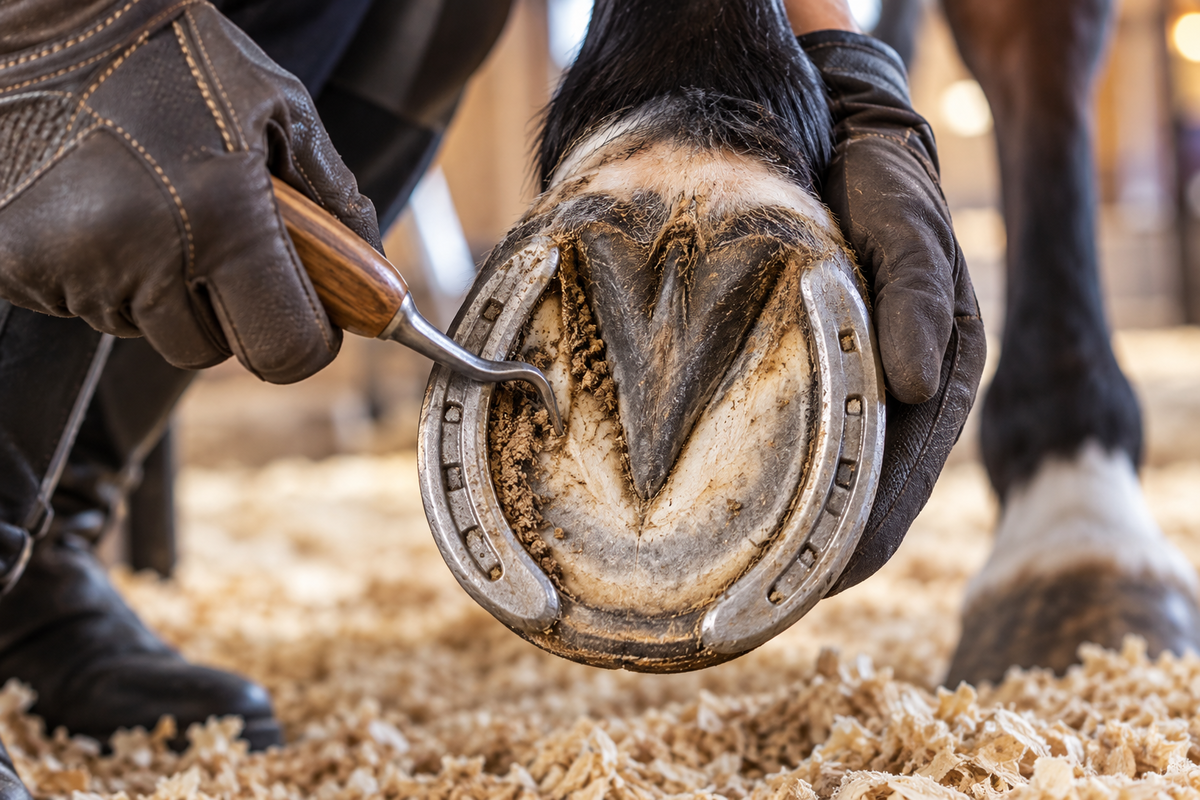
How to Clean and Check Your Horse's Hooves
Hoof care is non-negotiable. It should bookend every interaction with your horse to maintain structural soundness and ward off opportunistic bacterial infections.
Correct Leg Lifting Technique: Stand facing the horse’s hindquarters beside the shoulder (for front legs) or barrel (for hind legs). Run your hand smoothly down the back of the chestnut and cannon bone, squeezing the flexor tendons gently above the fetlock while leaning your shoulder softly against the horse to prompt a weight shift. As the foot lifts, cradle the hoof securely in one hand.
The Pick Motion and Anatomy: Hold the hoof pick with the pick end pointed away from your body. Point the pick downward toward the toe never upward toward the sensitive bulb of the heel. Clean firmly down the collateral sulci (the grooves on either side of the triangular frog) and the central sulcus, removing packed dirt, manure, and trapped stones.
What to Check Daily:
The Frog: Should feel firm yet resilient, similar to hard rubber. If it is soft, mushy, black, and emits a foul, rotting odor, you are dealing with thrush, requiring antiseptic treatment.
Foreign Objects: Inspect the white line and sole for embedded gravel, horseshoe nails, or glass fragments.
Shoe Stability: If shod, tap the shoe lightly to check for loose nails, shifted branches, or raised clenches that could cut the opposite leg.
Digital Pulse: Rest your fingers lightly over the digital artery behind the fetlock joint; a strong, bounding pulse indicates localized inflammation or early laminitis.
Grooming Before and After Riding
The purpose of grooming pivots noticeably depending on whether you are preparing for a schooling session or cooling down post-ride.
Pre-Ride Protocol: Preventing Friction Under Tack
Before any saddle pad, girth, or bridle touches the horse, every hair must be aligned and entirely free of grit.
The Girth and Saddle Zone: Run your bare fingers firmly over the withers, spine, and sternum. A single trapped grain of arena sand beneath a snug girth acts like coarse sandpaper, causing painful rubs, girth sores, and resistive behavioral reactions under saddle.
Bridle Contact Points: Ensure the poll, browband area, and chin groove are immaculate. Dirt under a tight noseband or crownpiece causes uncomfortable pressure points.
Post-Ride Protocol: Sweat Removal and Muscular Relief
After untacking, your primary task is soothing hot muscles and removing caustic dried sweat.
Strip the Sweat Marks: Use a sweat scraper or damp sponge to wash and scrape away dried sweat rings left under the saddle pad, along the girth line, and behind the ears.
Restore the Hair Coat: Once dried, use a rubber curry to lift crusty sweat marks, allowing air to reach the skin and preventing clogged pores (heat bumps).
Cold-Water Leg Care: Hose down tendons and hooves with cold water to draw out heat and wash away arena footing trapped around the coronary band and pasterns.
Common Horse Grooming Mistakes to Avoid
Even well-intentioned equestrians frequently fall into common habits that damage coat texture, cause discomfort, or create safety hazards.
Using Stiff Brushes on Sensitive Bony Prominences: Brushing directly over knee joints, hocks, or facial bones with a stiff dandy brush causes pain and fosters defensive grooming behaviors like ear-pinning or stepping away.
Brushing a Soaked Mane or Tail: Wet hair has high elasticity and fractures easily under tension. Always allow a wet tail to air-dry completely or mist it with conditioner before attempting to comb out tangles.
Over-Bathing with Detergent Shampoos: Washing your horse with soapy suds multiple times a week strips away natural sebum, leaving the skin flaky, dry, and prone to bacterial infections like rain scald. Stick to clear water rinses for daily sweat removal.
Ignoring Dirty Grooming Brushes: Using dust-filled, oily brushes simply redistributes old grit and fungus back onto clean skin. Wash your grooming brushes monthly in warm water with tea tree or antibacterial wash, and dry them bristle-down in the sun.
Compromising Ground Safety Positions: Ducking under a horse's neck, sitting on the floor while picking hind feet, or standing directly in the kick zone behind the tail compromises your escape routes. Always stay on your feet and maintain conscious physical contact.
Regular grooming is an art form that directly elevates your horsemanship. By executing each brushing step with deliberate anatomical awareness and meticulous attention to detail, you safeguard your horse's physical soundness and foster a trusting, cooperative partnership on the ground and in the saddle.
Editor’s Note: Always keep your grooming tote sanitized and avoid sharing brushes between horses showing unexplained skin irritation or scurf to prevent the accidental transmission of fungal spores.

Related Post

Back to Riding: Your September Layering Checklist for the New Season
After a summer break, returning to the stable requires a full wardrobe update. Discover how to layer base layers, breeches, and outerwear for the September riding season.

Competition Polo Shirts: Decoding the Equestrian Dress Code
From long-sleeve to short-sleeve, piqué to technical fabric understand why the polo collar is non-negotiable in equestrian competition dress codes and how to choose the right one.


