DESIGNED BY RIDERS, FOR RIDERS
Horse Riding in the Rain: What Riders Need to Know for Wet Weather Training

Autumn weather rarely accommodates a rigid training calendar. When persistent drizzle turns into an unyielding downpour, many equestrians face a familiar dilemma: should you cancel your schooling session, or can you step into the stirrups and ride through the storm? In professional equestrian sport, waiting for immaculate blue skies is an unsustainable luxury. Competitions are held in driving rain, cross-country courses run through soaked turf, and maintaining an equine athlete's conditioning requires continuous adaptation to changing elements.
However, venturing out in wet conditions is not simply a matter of enduring discomfort. Rainwater fundamentally alters footing traction, compromises the grip of your reins, and saturates heavy tack. If managed incorrectly, riding in the rain exposes your horse to chilled lumbar muscles, hoof softening, and fungal skin conditions like rain scald. Concurrently, it can ruin expensive leatherwork.
With engineered waterproof textiles, specialized exercise sheets, and tactical footing adjustments, wet weather training transforms from a soggy trial into a constructive schooling opportunity.
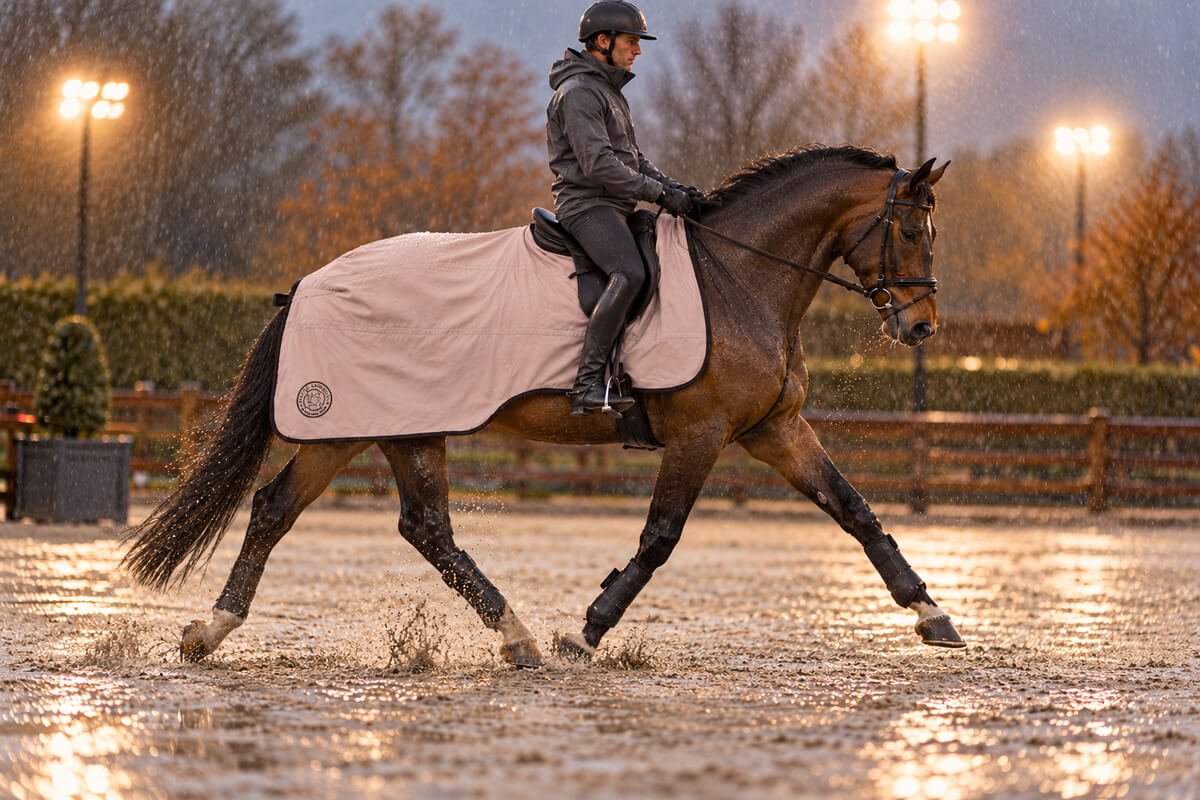
Can You Ride a Horse in the Rain?
The short answer is almost always yes horses are naturally adapted to open-air weather. However, a responsible equestrian evaluates the scenario through a calculated risk matrix rather than a blanket yes-or-no approach.
Assessing Atmospheric Danger: Light mist, steady autumn rain, and moderate downpours present no physiological danger to a sound horse. The exceptions are severe electrical storms, sustained gale-force winds, or heavy hail. Lightning strikes pose a severe hazard in open outdoor arenas and along tree-lined tracks. High winds also diminish equine auditory awareness, causing hyper-reactivity, spooking, or unpredictable flight responses.
Evaluating Arena and Trail Footing: The deciding factor is rarely the rain falling from above, but rather the ground underneath:
Engineered Sand Arenas: All-weather silica sand arenas blended with synthetic fleece fibers generally handle high rainfall effortlessly, maintaining structural cushioning and non-slip stability.
Compacted Clay Arenas: Poorly drained soil or unamended sand rings turn into slick, greasy surfaces where horses lose hind-end propulsion, risking soft tissue strains, suspensory injuries, and slips.
Grass Tracks and Turf: Saturated grass requires extreme caution. Without cross-country studs fitted into shoes, schooling fast paces on wet turf risks catastrophic slipping.
The Temperament Factor: Some horses relish working in cool rain, while others pin their ears, invert their spines, or resist moving forward when drops strike their sensitive ears and eyes. Understanding your mount's individual tolerance determines whether to focus on rigorous flatwork or adjust to an easy, confidence-building loose-rein hack.
What to Wear for Horse Riding in the Rain
Navigating heavy rain in the saddle exposes the shortcomings of standard water-resistant outerwear. Water resistance only repels light mist; authentic wet weather riding demands laboratory-tested waterproof ratings and equestrian-specific ergonomics.
Waterproof Membrane Architecture: Standard plastic ponchos trap body heat, turning the interior into a clammy greenhouse that chills you the moment you halt. Look for technical riding outerwear featuring hydrophilic or microporous membranes boasting at least a 10,000mm hydrostatic head rating paired with a minimum 10,000g/m²/24h breathability rating. Taped or vulcanized seams are non-negotiable to prevent moisture from seeping through needle perforations under wind pressure.
Riding-Specific Tailoring Details:
Two-Way Front Zippers: Allows you to unzip from the hem upward, enabling the coat panels to clear the pommel without bunching in the lap.
Deep Rear Gussets: Zipped or snap-pleated saddle skirts open wide over the cantle, keeping your seat dry while preventing water from funneling under the saddle panels.
Contoured Storm Hoods: Look for stiffened brim hoods shaped to fit cleanly over or under a riding helmet without obstructing your peripheral vision when checking approaching horses in a crowded ring.
Breeches and Hand Traction: Wet leather saddles paired with damp cotton-blend breeches create a dangerously slick interface. Technical breeches with high-density full-seat silicone provide superior mechanical grip on wet leather. For your hands, swap smooth leather gloves for technical synthetic suede models with textured palm grips that generate increased friction when soaked, preventing reins from slipping through your fingers.
How to Keep Your Horse Comfortable in Wet Weather
Keeping your horse calm and mechanically sound in the rain begins with protecting sensitive anatomical zones.
Protecting the Lumbar and Sacroiliac Region: A horse’s large loin and croup muscles generate tremendous propulsion. When cold rainwater continuously runs over the lumbar spine, these muscles contract defensively to prevent heat loss. This tension locks the horse's back, creating a hollow frame, choppy stride mechanics, and elevated risk of muscular sprains. Buffering this area against direct chilling rain is critical.
Facial and Ear Sensitivity: Driving rain stinging the delicate inner ear canal can make an otherwise calm horse shake its head violently or crane its neck away from the wind. Equipping your horse with a snug, water-repellent soundless ear bonnet deflects raindrops from the ears, maintaining forward focus.
Hoof Resilience in Wet Ground: Saturated arena sand and mud soften the periople and sole over extended exposure. Applying a thin coat of pine tar, laurel oil, or a water-repellent hoof balm to clean, dry hooves prior to tacking up creates a hydrophobic barrier, preventing excessive moisture absorption and shielding against bacterial hoof compromise.
When to Use a Rainproof Exercise Sheet
While casual riders often associate exercise sheets with freezing mid-winter hacks, a dedicated waterproof exercise sheet is an essential autumn schooling asset.
For comprehensive background on how different technical weights integrate into overall stable management, explore our horse rugs and blanket types guide.
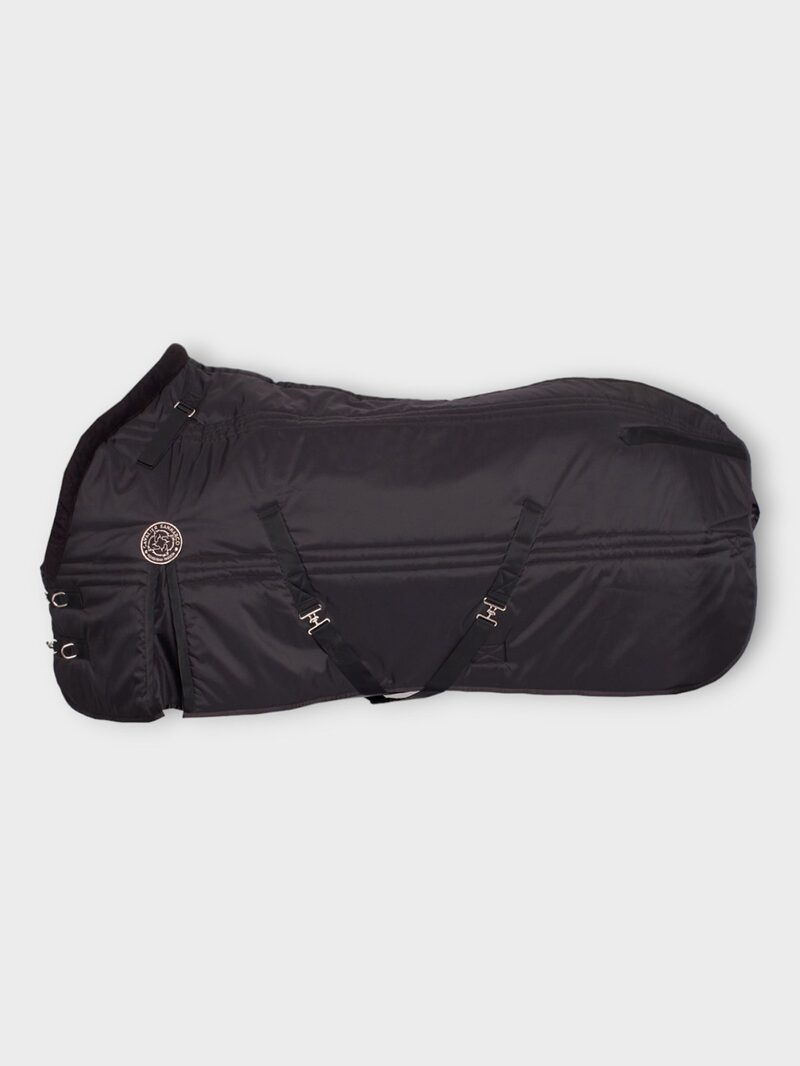
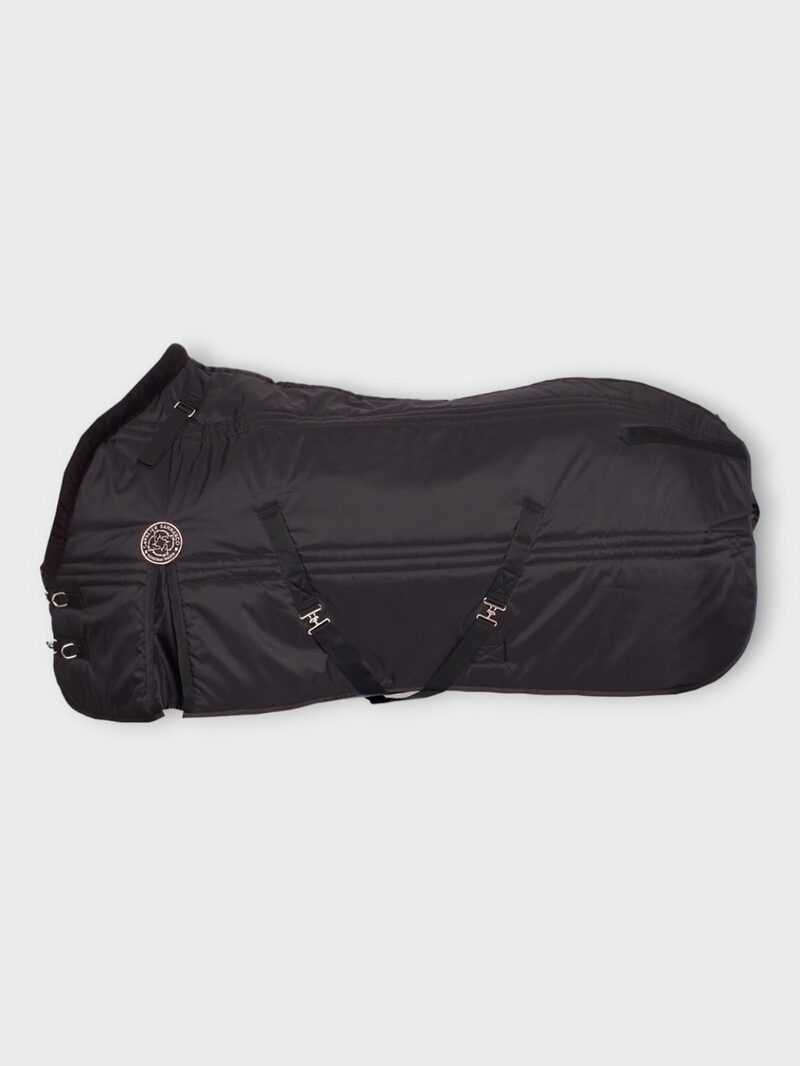
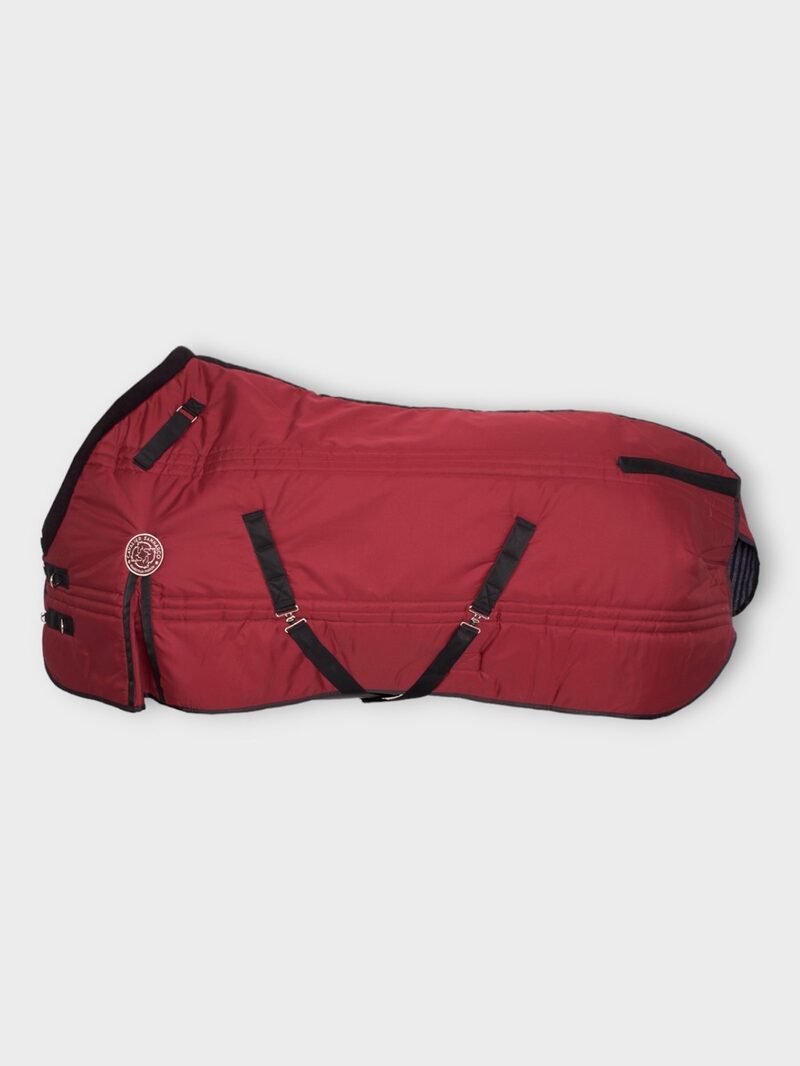
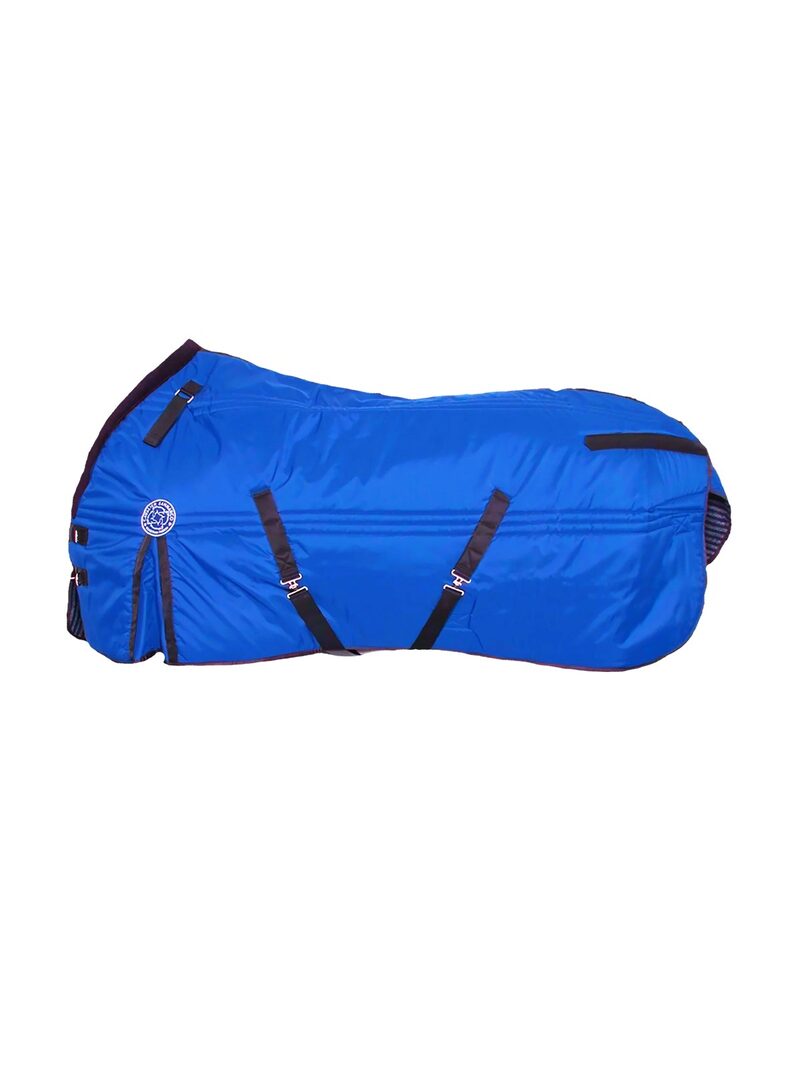
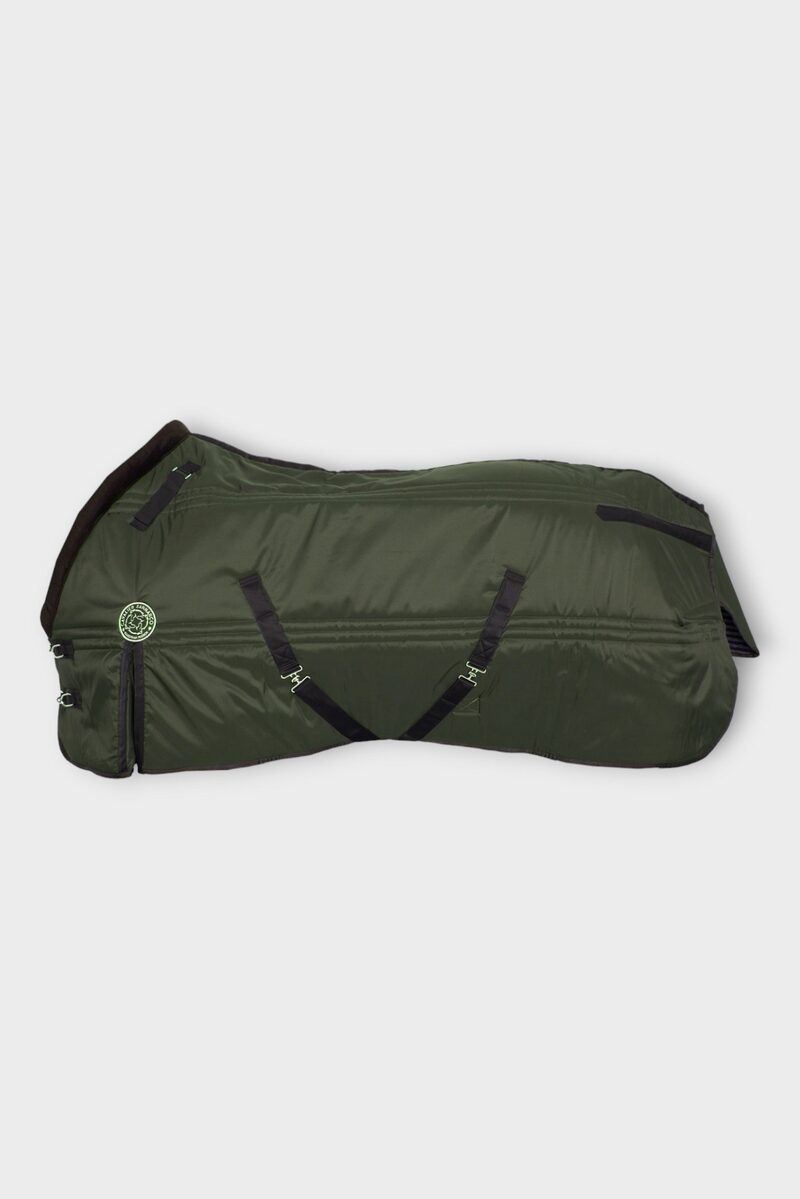
The Modern Quarter-Sheet Solution: Unlike traditional wool or fleece quarter sheets that absorb driving rain and turn into heavy, ice-cold blankets on the horse's quarters, a high-performance shell is engineered to repel precipitation entirely. A premier example is the Rain-XP blue black gold rainproof exercise sheet, purpose-built for intense rain, snow, and blustery conditions.
Key Performance Advantages:
Impermeable Outer Shell: Featuring heavy-duty ripstop textile with high hydrostatic resistance, water beads and cascades off the flank without penetrating the weave.
Micro-Fleece Thermal Lining: Insulates warm dorsal muscles and kidneys against freezing drafts while absorbing any initial sweat generated during warm-up.
Ergonomic Saddle Cut-Out: Engineered with a tailored saddle contour and secure girth attachments, it can be fitted cleanly beneath or around the saddle flaps, ensuring your leg contact remains completely uninhibited.
Reflective Accents: Integrated high-visibility gold piping provides crucial visual safety when training in murky twilight or schooling on country roads in overcast weather.
Riding Safely on Wet Ground
Riding on rain-soaked ground requires deliberate biomechanical adjustments to ensure equine stability and protect fragile joints.
Pace Control and Balance
Avoid pushing for maximum extension on wet sand or soaked turf. Prioritize collection, rhythm, and a balanced center of mass. Keep your horse working between your leg and hand aids, ensuring the hind legs remain actively stepped under the body rather than trailing out behind, where they are prone to slipping.
Cornering and Circles
Widen your turns and avoid tight, high-speed circles. On wet surfaces, centrifugal force easily causes the outer hoof to push away footing, leading to stifle or hock twists. Maintain an upright, vertical torso through turns rather than leaning inward like a cyclist.
The Jump Approach
If schooling over fences in rain, shorten the approach stride and present the horse more perpendicularly to the fence. Avoid angled takeoffs. Use lower schooling heights and ensure landing zones have been checked for standing puddles that could conceal deep holes or uneven footing.
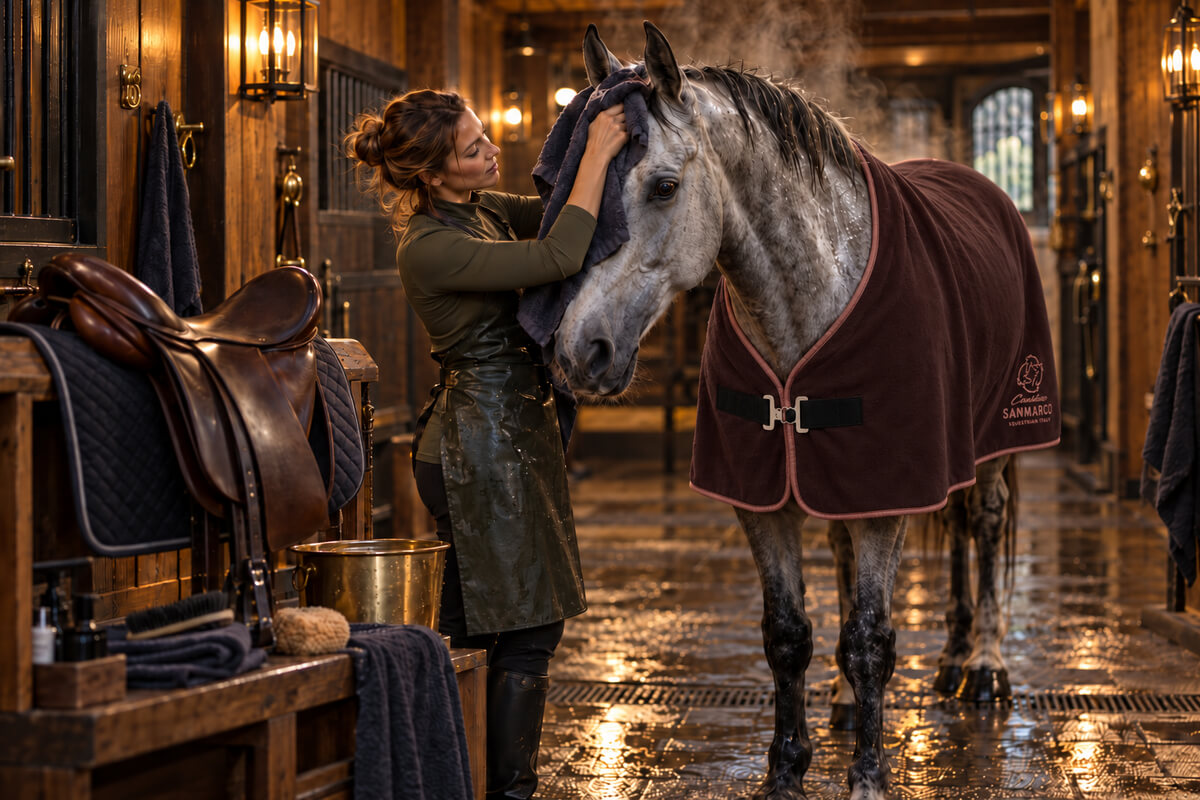
How to Dry Your Horse and Gear After a Rainy Ride
The ride is only complete when both athlete and equipment are thoroughly dried, conditioned, and stored safely away from ambient barn humidity.
Post-Ride Equine Care:
Scrape and Towel: Immediately remove the saddle and run a sweat scraper over the coat to strip standing rainwater. Use thick microfiber stable towels to vigorously rub down the legs, ears, poll, and girth area.
Deploy the High-Wicking Cooler: Layer a moisture-transporting fleece or wool cooler over the horse. The capillary action pulls residual moisture from the undercoat to the outer surface of the cooler, allowing the horse’s skin to dry thoroughly without a drop in body temperature.
Thorough Hoof Inspection: Wash arena grit away from the coronet band and heel bulbs with clean water, then dry the pasterns thoroughly with a towel to prevent mud fever (scratches).
Drying and Caring for Saturated Tack: Wet leather requires meticulous, gentle care to prevent dry rot and structural cracking:
Never Use Direct Heat: Never place saturated leather saddles, bridles, or boots near radiators, heaters, or open tack room fires. Direct heat bakes the fibrous matrix of the leather, evaporating essential tanning oils and causing brittle, permanent fractures.
Slow Ambient Evaporation: Wipe off sand, grit, and surface water with a damp sponge. Hang the tack in a well-ventilated, temperate room on shaped wooden racks.
Replenish Tanning Lipids: Once the leather is about 80% dry (cool to the touch, but not wet), apply a generous layer of high-grade leather balsam containing beeswax and lanolin to lock in suppleness.
Drying Textile Sheets: Hang your rainproof exercise sheet and saddle pads by their spine line in a well-ventilated drying room. Ensure all mud is dry and brushed off before the next use to prevent grit abrasion.
By preparing for the weather with the right protective systems, rain stops being an obstacle and becomes an invaluable element in cultivating a dependable, versatile equine partnership.
Editor's Note: Always check the stitching around your stirrup leathers and girth billets following a thoroughly soaked ride. Water temporarily expands leather fibers, which can stretch stitching holes and loosen hardware fittings over time.

Related Post

Back to Riding: Your September Layering Checklist for the New Season
After a summer break, returning to the stable requires a full wardrobe update. Discover how to layer base layers, breeches, and outerwear for the September riding season.