DESIGNED BY RIDERS, FOR RIDERS


Summer Horse Care: Keeping Your Horse Cool & Protected - Cavalier SanMarco
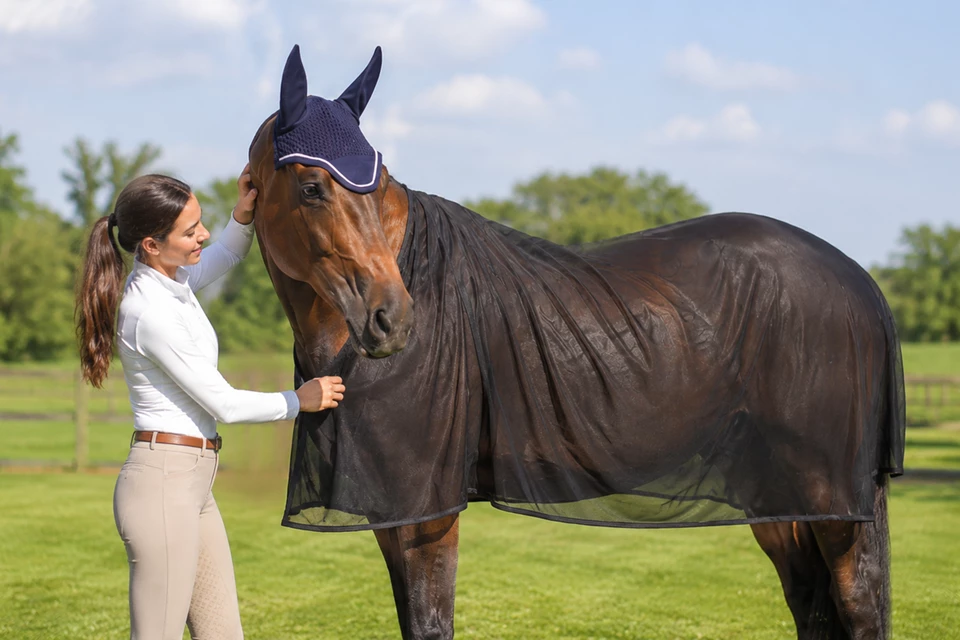
Managing a horse’s health, performance and overall well-being during peak summer requires a proactive approach to environmental and physical protection. As temperatures rise in July, horse care in summer transforms from routine maintenance into a vital strategy for preventing heat-related illnesses and keeping insect stress at a minimum. Known in the equestrian world as a high-demand period for protective management, the summer months require riders and stable managers to adjust their daily routines to help horses handle intense heat and high bug activity.
Whether you manage an elite sport horse in intense competition or care for a pasture-kept companion, implementing a structured equine routine is critical for preventing heat stress. Factors such as access to clean water, stabling ventilation, clipping status, and pasture turn-out times all play a role in how a horse regulates its internal temperature. Because each seasonal challenge requires specific equipment; fly sheets, cooling mesh layers, and targeted care routines are designed for different environmental demands.
By adjusting your daily management and choosing horse accessories with the right function, you can support your horse's comfort and long-term health throughout the most demanding summer weeks.
Signs of Heat Stress in Horses: What to Watch For
Recognizing the early symptoms of physical distress caused by high temperatures is the first and most critical rule of summer horse care. When a horse's natural thermoregulation system becomes overwhelmed by the summer heat, their recovery rate slows down significantly, making quick identification necessary to prevent heat exhaustion. Especially when exercising in the afternoon or resting in a stagnant stall, a horse exposed to extreme humidity can quickly show a dangerous increase in core body temperature. Identifying these changes early allows you to take immediate cooling action.
Elevated Respiration and Heart Rate: An overheating horse will display rapid, shallow breathing or panting, often referred to as inversion, where the breathing rate exceeds the pulse. If a horse's respiration stays unusually high long after an exercise session has ended, it indicates that their body is struggling to dump internal heat. Monitoring these baseline vital signs during July workouts helps you spot potential heat stress before it compromises the horse's metabolic stability.
Lethargy and Poor Coordination: As heat stress advances, horses often become visibly depressed, showing a lack of interest in food, a dropped head position, and overall sluggishness. In severe situations, they may display weakness or stumbling while walking, which points to dehydration and electrolyte depletion. Watching for a dull look in the eyes and delayed responses to everyday cues is vital when assessing their immediate comfort level.
Dry Skin or Excess Sweating: While profuse sweating over the entire body is a clear sign that a horse is actively fighting the heat, a sudden cessation of sweat production is an extreme emergency known as anhidrosis. If a horse feels hot to the touch but has completely dry skin during exercise or high temperatures, their internal cooling mechanisms have failed. Checking the horse's sweat patterns regularly during summer turn-out ensures their sweat glands are working properly.
Hydration First: How Much Water Does a Horse Need in Summer?
Replacing lost fluids and essential minerals is the foundation of any safe warm-weather management routine, as dehydration can quickly lead to systemic complications like impaction colic. During typical conditions, an average adult horse consumes a substantial volume of water daily, but this requirement can easily double when high ambient temperatures cause constant sweating. Providing unrestricted access to fresh, clean water is mandatory for supporting digestion, circulation, and temperature control.
Increased Daily Water Consumption: In the peak of July, a typical horse may require anywhere from 40 to 75 liters of water per day just to maintain standard hydration, depending on their body weight and workload. Water should be kept cool and clean, as horses will often refuse to drink from stagnant, sun-warmed buckets or algae-covered tanks. Checking automatic waterers and manual buckets multiple times a day helps ensure your horse is consuming enough fluids.
Electrolyte and Mineral Replacement: Sweating heavily removes large quantities of essential sodium, potassium, and chloride from the horse's system, which cannot be replenished by plain water alone. Offering a high-quality loose salt option or adding balanced electrolyte supplements directly into their daily feed helps restore these critical minerals. Keeping a clean salt block available in both the stall and the paddock supports their natural urge to drink and maintain osmotic balance.
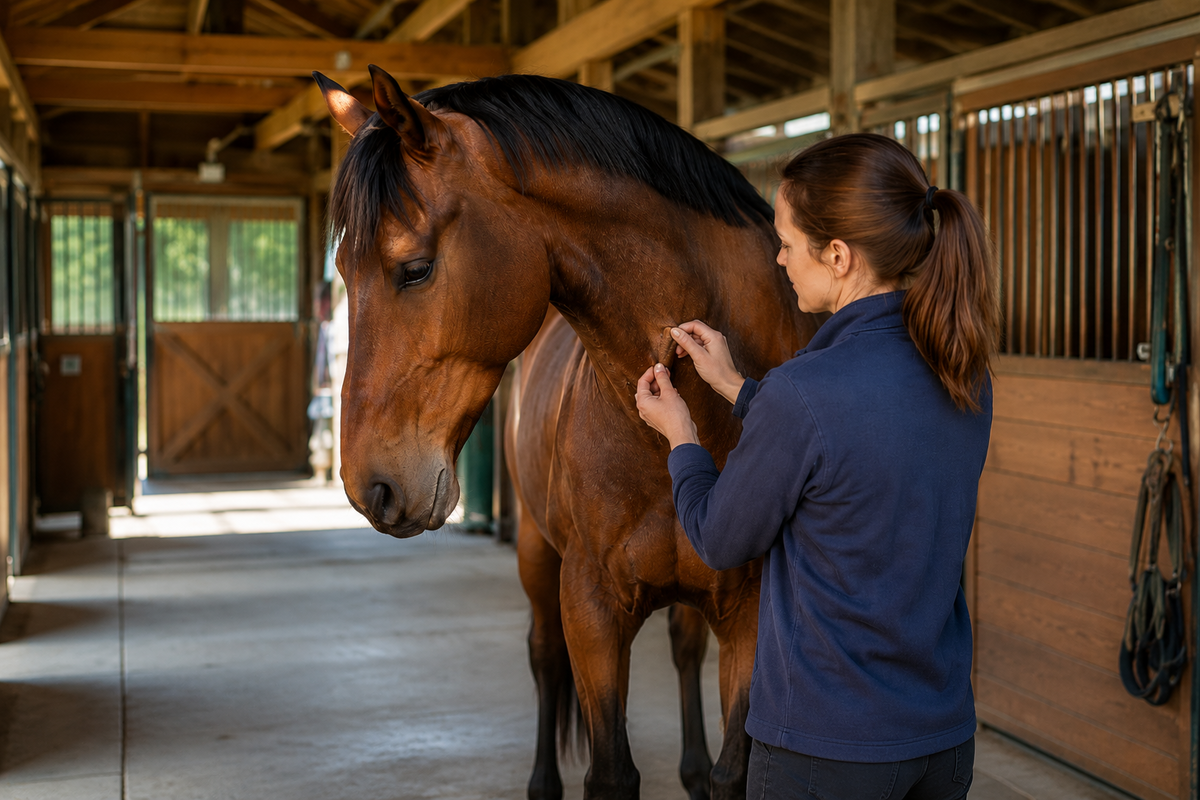
The Skin Pinch Hydration Test: To evaluate your horse's hydration status, you can perform a quick skin pinch test on the side of their neck or shoulder. In a well-hydrated horse, the pinched skin will snap flat immediately, while in a dehydrated animal, the skin fold will remain tented for several seconds. Combining this simple physical check with an inspection of the gums—which should be pink and moist—provides an accurate picture of fluid levels.
Shade, Shelter & Ventilation: Environmental Management
Modifying the horse's immediate living space to maximize natural airflow and block direct solar radiation is a highly effective way to lower the heat load inside the stable. Enclosed barns can trap humid air and ammonia fumes, creating a stagnant microclimate that compromises respiratory health and increases thermal discomfort. Designing an environment that allows constant air movement helps horses rest comfortably during the hottest hours of the day.
Strategic Turn-Out Schedules: Altering your pasture schedule to utilize overnight or early morning turn-out keeps horses off the sun-baked fields during the peak UV index hours of 11:00 AM to 4:00 PM. Bringing horses into a cool, shadowed barn during midday protects them from direct sunburn and reduces the energy they must spend staying cool. If overnight turn-out is not an option, pastures must feature deep natural shade structures or spacious run-in sheds.
Barn Fans and Active Air Movement: Installing commercial-grade, agricultural-approved fans over individual stalls and along main barn aisles helps create a steady breeze that lowers effective ambient temperatures. Active ventilation also keeps irritating dust, mold spores, and biting insects from settling in the stable air. Ensuring all windows and aisle doors remain wide open promotes continuous cross-ventilation, which prevents hot air from pooling under the barn roof.
Pasture Shade Structures: When horses are kept outdoors during the day, they require sturdy, well-ventilated structures that offer relief from direct sunlight. Run-in sheds should have high ceilings and open back vents to prevent heat from getting trapped inside the shelter. Trees provide excellent natural shade because their leaves naturally cool the air through transpiration, making shaded fence lines a valuable asset for summer pasture management.
Fly Protection in July: Masks, Sheets and Timing
The surge of biting flies, gnats, and mosquitoes during midsummer is more than just an annoyance; it causes constant stamping, pacing, and stress that elevates the horse's body temperature and damages hooves. Utilizing lightweight, highly breathable horse fly protection gear creates an effective physical block that shields sensitive skin without adding insulation. Balancing chemical repellents with proper physical layers ensures your horse can graze peacefully without constant insect irritation.
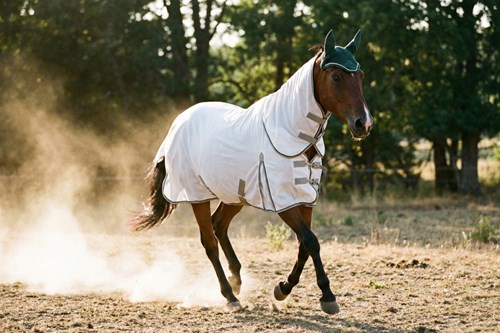
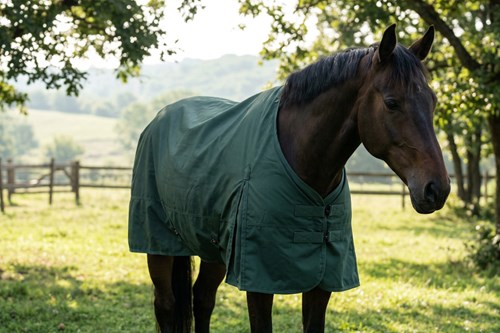
UV-Reflective Fly Sheets: Modern fly sheets are engineered from high-tech, open-weave mesh materials that block biting pests while letting the slightest breeze pass directly through to the horse's skin. Many premium sheets feature advanced UV-reflective coatings that protect the horse's coat from sun-bleaching and shield pink skin from painful sunburns. To find specialized, breathable options designed for maximum summer ventilation, explore our horse rugs & blankets collection.
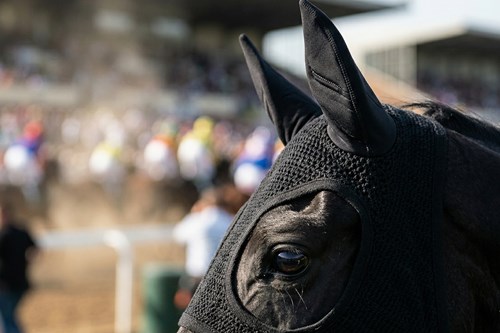
Comprehensive Face and Eye Protection: Fly masks equipped with fine mesh panels shield the horse's delicate eyes and ears from irritating headflies, reducing the risk of summer conjunctivitis and tear-duct infections. A well-fitted mask should feature secure closures and soft fleece padding along the noseband to prevent rubs during long turnout sessions. To discover durable, protective designs that safeguard your horse's vision during bug season, you can view our full range of horse fly protection gear.
Maximizing Summer Turn-Out Comfort: Combining physical sheets with long-lasting fly sprays and precise turn-out timing minimizes insect-driven pacing along fence lines. Applying repellent to the legs and belly before turn-out prevents flies from nesting under the mesh layers, keeping the horse calm and stationary. For a complete breakdown on choosing the ideal mesh density and fit for different insect populations, check out our comprehensive fly mask & fly rug guide.
Post-Ride Cooling Routine: Step-by-Step
After a summer training session, bringing your horse's vital signs and internal temperature back to baseline should be an orderly, step-by-step process that prioritizes immediate heat dissipation. Stopping work abruptly without a structured cool-down period allows metabolic waste to pool in the muscles and forces the heart to work harder to cool the body. A methodical washing and scraping routine ensures your horse safely transitions from exercise to a restful state.
Active Walking Cool-Down: Always conclude your riding session with at least 10 to 15 minutes of active, unmounted walking on a long reins to let the horse's respiration settle naturally. Walking promotes continuous blood flow through the major muscle groups, helping to clear lactic acid while allowing the initial sweat layer to evaporate. This phase should take place in a shaded arena or tree-lined path away from direct sunlight.
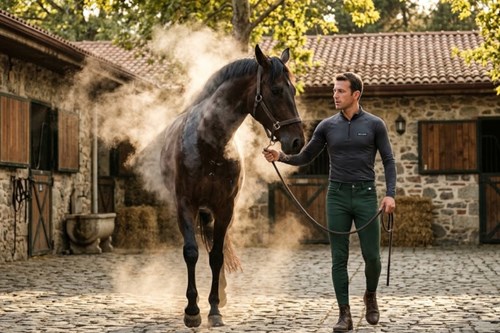
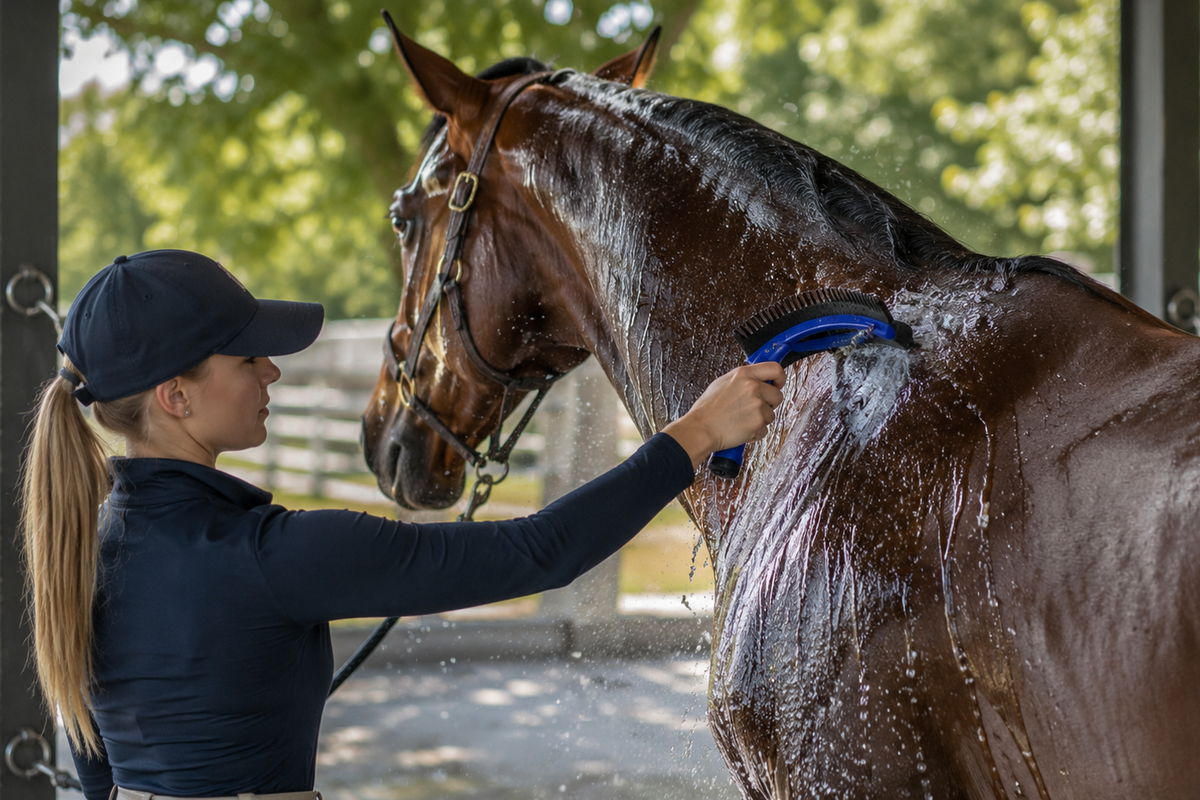
Continuous Cold Water Application: Hose the horse's entire body with cold water, focusing heavily on the large blood vessels running along the inside of the hind legs, the jugular veins on the neck, and the chest. Research has proven that leaving a heavy layer of water on a hot horse can quickly warm up and act as an insulating blanket, trapping heat against the skin. Apply cold water continuously, then immediately use a sweat scraper to strip the warm water away, repeating the process until the water running off the horse's belly feels completely cool.
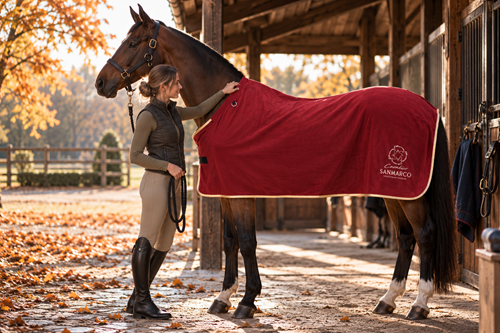
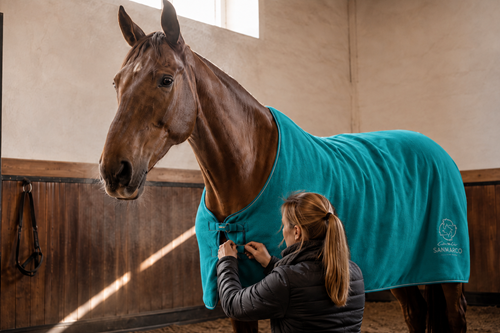
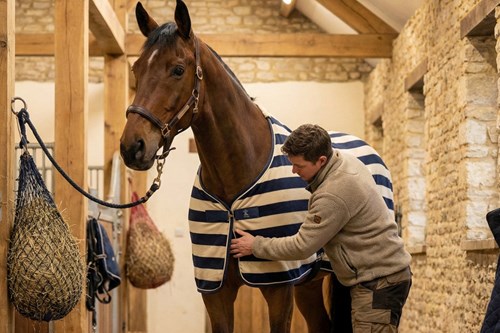
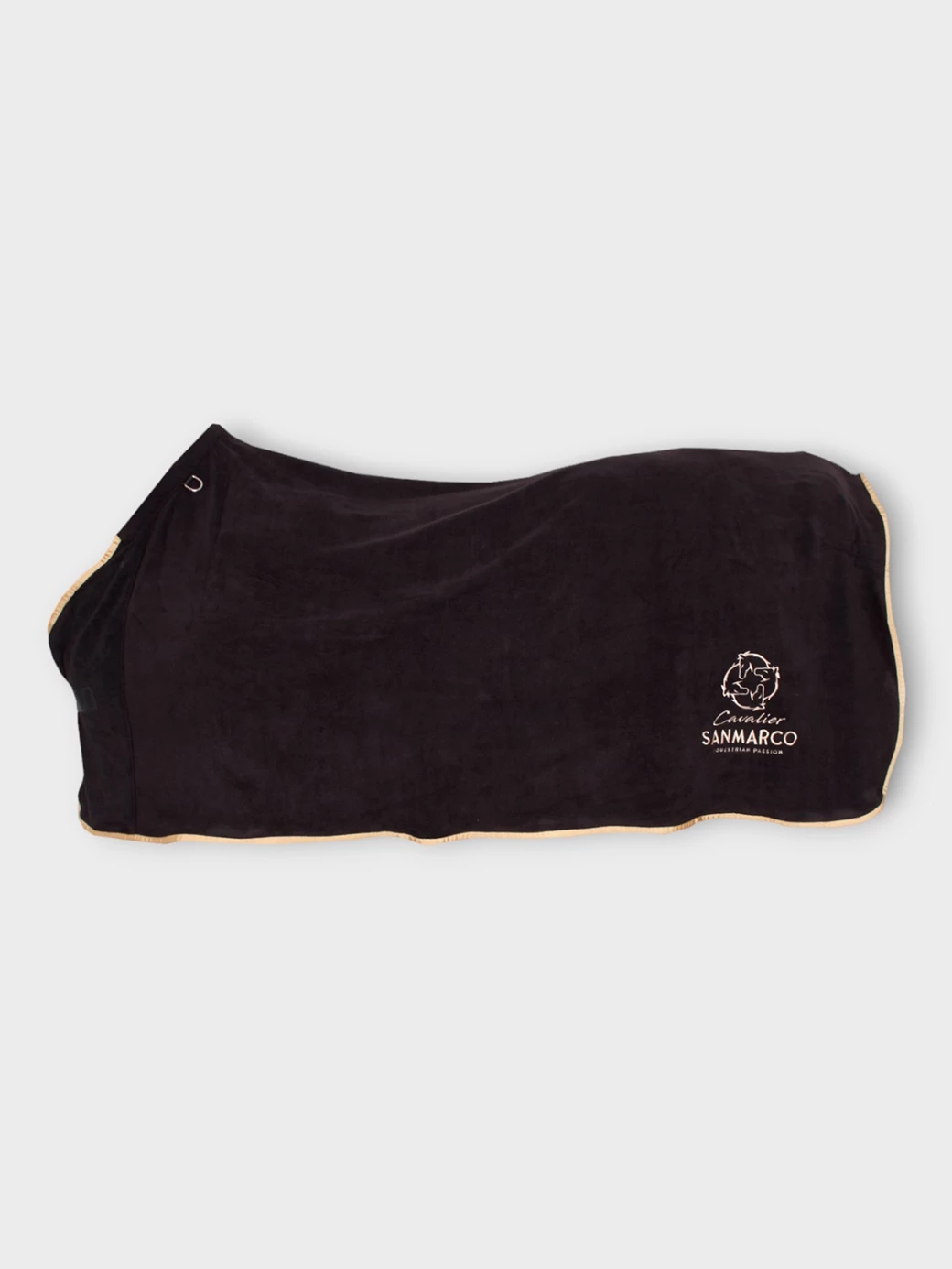
Use of Specialized Cooling Blankets: Once the horse is thoroughly scraped and no longer dripping wet, dressing them in a specialized horse cooling blanket helps manage the remaining moisture. These technical mesh or hyper-evaporative coolers draw residual sweat and water away from the coat, preventing a chilled back while promoting steady air cooling. This final step stabilizes their core temperature before they return to their stall or paddock.
Trust the Power of a Dedicated Summer Care Routine
Balancing hydration, environmental ventilation, and insect protection directly determines your horse's comfort, stamina, and recovery throughout the peak of July. A consistent management routine that combines continuous cold-water cooling, UV-reflective fly gear, and early morning workouts creates a safe environment for your horse to thrive despite intense heat.
When making these management choices, it is essential to look closely at your horse's unique physical traits and daily environment. Is your horse clipped for the summer season? Do they have large patches of pink skin prone to sunburn? Does your stable have adequate natural cross-breezes? The answers to these practical questions are the most reliable guide when selecting turn-out hours, electrolyte quantities, and protective mesh weights.
By selecting equipment and routines that fit your horse's anatomy, workload, and regional climate, you improve daily comfort while safeguarding long-term health. Small protective steps taken during the hottest weeks of the year make a substantial difference in everything from skin health to metabolic recovery.
Editor’s Note: To prevent fungal skin conditions like rain rot or sweet itch during humid summer months, never dress a horse in a fly sheet or cooling blanket while their coat is still damp with sweat or wash water. Always ensure the hair is completely dry and scraped clean before securing closures, and wash summer gear regularly to remove accumulated sweat salts and dirt.