 DESIGNED BY RIDERS, FOR RIDERS
Junior Rider's September Wardrobe Guide: Elevating the Autumn Season

September marks an unmistakable turning point in the equestrian calendar. As summer training camps wrap up and the academic school term begins, the focus shifts back to structured barn schedules, autumn training development, and the start of the competitive indoor season. Just as families prepare pencil cases and school uniforms for the return to the classroom, a deliberate "back-to-stable" wardrobe refresh is essential for young equestrians who are already active in the sport.
Children and teenagers grow substantially over the summer months, and gear that fit comfortably in June often restricts shoulder mobility or pulls tight at the ankles by early autumn. Furthermore, seasonal temperature drops demand technical layering that shields young riders during chilly dawn warm-ups without causing overheating in midday ring sessions. Moving past basic introductory riding kits, committed junior riders now require athletic tailoring, competition-legal elegance, and specialized textiles designed to match their advancing skills in the saddle.
By curating dedicated training and competition wardrobes tailored to your rider’s age group, you set them up for a confident, comfortable, and successful autumn season.
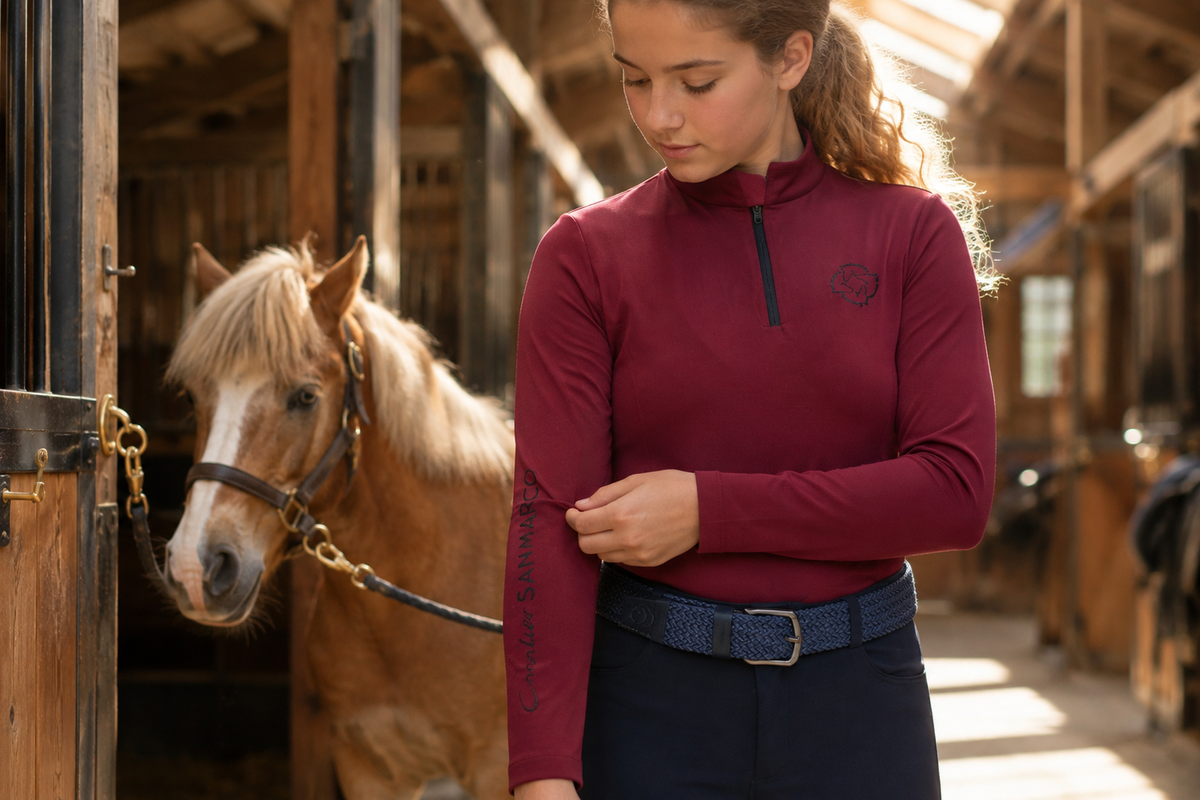
September Reset: Why Your Junior Rider Needs a Wardrobe Update
September is more than just a change on the calendar; it is the catalyst for a full athletic reset in the stable. Treating equestrian apparel with the same seasonal forethought as academic back-to-school preparations ensures your child steps into the autumn term fully equipped for rigorous schooling.
Growth Spurts and Compromised Position: A child riding in outgrown breeches or a tight jacket faces more than aesthetic issues improper fit directly undermines athletic posture. Short breeches pull knee patches out of their intended anatomical alignment, while tight jackets restrict elbow release over jumps. Conducting a comprehensive seasonal fit check prevents minor clothing restrictions from developing into subtle position flaws.
Adapting to Autumn Climate Shifts: The shift from humid summer mornings to crisp September breezes and unpredictable showers requires an evolution in gear. Lightweight training tees must be replaced with temperature-regulating base layers, and unlined summer vests need the reinforcement of weather-resistant shells.
Differentiating Age Categories: Junior equestrians encompass distinct developmental stages with contrasting clothing needs. Younger children (ages 6 to 10) benefit from high-stretch fabrics, pull-on elasticated waistbands, and ultra-durable reinforced knees that withstand stable play and pony handling. Conversely, teenage juniors (ages 11 to 16) require tailored cuts, structured technical fabrics with light muscle compression, and precise adult-adjacent styling that reflects serious competition ambitions.
The Competition Look: Polo Shirts, Jackets, and White Breeches
The autumn show season brings formal presentation to the forefront. Upgrading your junior rider’s competition wardrobe ensures they enter the ring exuding confidence while respecting strict federation turnout regulations.
Technical Junior Competition Polos: Modern youth show shirts replace stiff, uncomfortable cotton with featherlight, four-way stretch technical knits. Crisp, structured white poplin collars maintain traditional decorum with a stock tie or pin, while concealed snap plackets and hidden breathable mesh panels keep young athletes cool under pressure. For younger kids, soft collar bands that do not chafe sensitive necks are vital; for older juniors, sharp tailoring that stays tucked neatly into breeches creates a polished silhouette.
Structured Yet Flexible Show Jackets: A high-performance youth competition coat must move synchronously with the rider over oxers and through dressage tests. Unlined, water-repellent softshell jackets with mesh inserts provide complete freedom through the shoulders. Ensure the sleeve length falls cleanly over the wrist without bunching when the rider's hands are elevated in a schooling frame.
Competition Breeches Built for Stability: Pristine white or cream breeches are non-negotiable for formal show rings. For junior competitors, look for silicone full-seat or knee-patch grips tailored to youth proportions, providing reliable stability on dynamic ponies. Opaque, stain-resistant technical fabrics that wash clean easily give parents peace of mind between consecutive weekend classes.
The Training Look: Base Layers, Tech Polos, and Everyday Breeches
While show turnout demands formal elegance, everyday training apparel is the true workhorse of a junior rider's autumn routine. Durability, practical ease, and sporty sophistication anchor the schooling wardrobe.
Long-Sleeve Technical Base Layers: High-performance base layers are the absolute foundation of autumn schooling. Featuring quarter-zip stand-up collars and micro-mesh underarm ventilation, these tops keep young riders warm during cool morning lessons while wicking sweat away as physical intensity climbs. Younger riders appreciate vibrant accent colors and soft flatlock seams, while older juniors prefer modern earth tones that integrate into sleek schooling outfits.
Daily Schooling Polos: Breathable pique or jersey tech polos offer a smart, structured appearance for clinics and regular training days. High elastane contents allow uninhibited movement when tacking up, bending, or adjusting stirrup leathers.
Durable Everyday Breeches and Riding Tights: Autumn schooling calls for robust materials that endure mud, saddle friction, and constant laundering. Darker hues such as navy, graphite, and hunter green conceal stable grime effectively. High-waisted riding tights with integrated phone pockets and wide elastic waistbands are particularly favored by teenage riders for supreme all-day comfort.
To discover competition jackets, training base layers, and durable breeches designed specifically for youth athletes, browse our complete junior equestrian horse riding apparel collection.
Autumn Layering for Kids: What Goes Under, What Goes Over
Navigating autumn temperatures requires a practical, modular layering strategy that young riders can easily adjust independently at the barn.
The Three-Layer System:
The Base Layer: Sits directly against the skin to draw sweat away from the body, preventing chills during cool-downs.
The Insulating Mid-Layer: A hybrid padded vest or lightweight micro-fleece sweater that traps core heat while keeping arms free for rein aids.
The Protective Outer Layer: A windproof, waterproof softshell or rain jacket that blocks seasonal elements without adding bulk.
Age-Specific Layering Considerations: Younger children often struggle to regulate body temperature and may forget to layer down when warm. Opt for vests with easy-grip zippers and lightweight packable jackets that stow easily into grooming kits. Older juniors require breathable, form-fitting layers that slip smoothly under safety vests without restricting ribcage expansion.
Accessories That Complete the Junior Look
Finishing details bridge the gap between everyday riding and a polished, professional turnout, while ensuring all-day safety and warmth.
Technical Riding Socks: Youth riders need thin, moisture-wicking knee-high socks designed to fit smoothly under tall boots and chaps without bunching at the heel. Compression arch bands prevent slippage inside the boot during long hours on their feet.
All-Weather Riding Gloves: Cold hands compromise fine rein contact. A dedicated pair of autumn riding gloves featuring reinforced rein grips, touchscreen-compatible fingertips, and light wind-blocking linings ensures steady hands and warm fingers throughout frosty morning workouts.
Structured Leather Belts: A classic leather belt with a stirrup or bit buckle anchors breeches securely, preventing slippage over jumps and completing a refined schooling appearance.
Junior Equestrian Shopping List: September Edition
Before the autumn season hits full stride, use this practical checklist to audit your child’s riding wardrobe:
2-3 Long-Sleeve Technical Base Layers: Moisture-wicking tops with quarter-zip collars for daily schooling.
1-2 Technical Show Polos: Crisp white collars with breathable mesh panels for upcoming autumn competitions.
2 Pairs of Dark Schooling Breeches/Tights: Durable, stain-resistant fabrics with secure silicone grips.
1 Pair of Pristine White Competition Breeches: Premium four-way stretch fabric for show days.
1 Lightweight Padded Hybrid Vest: Essential core insulation for changeable autumn weather.
1 Technical Softshell or Competition Coat: Weather-resistant outer layers for training clinics and the show ring.
3-4 Pairs of Technical Riding Socks: Breathable, thin knee-high designs that protect against boot chafing.
1 Pair of Autumn Riding Gloves: Flexible, tactile grips with light thermal protection.
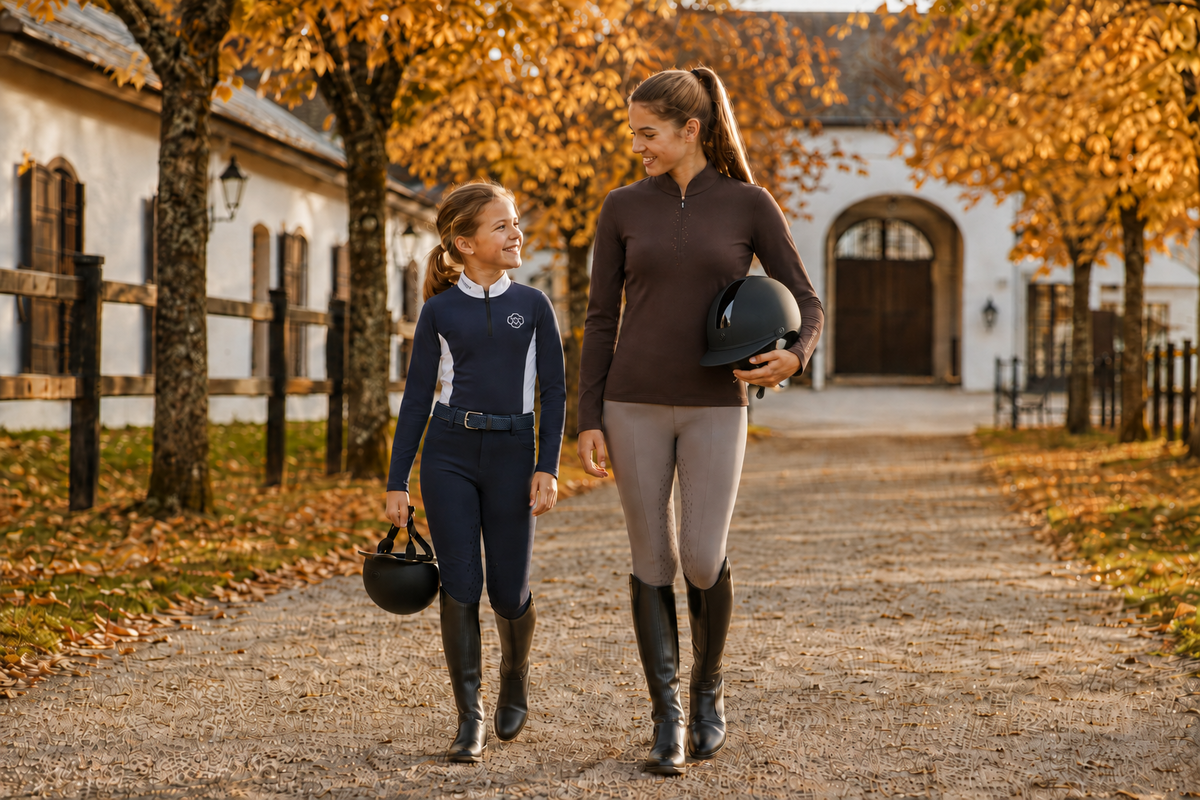
A Confident Start to the Autumn Riding Season
Investing in a thoughtfully curated autumn wardrobe empowers your junior rider to focus entirely on their equestrian progress, horsemanship, and partnership with their pony. When apparel fits properly, adapts to unpredictable weather, and offers functional stability, young equestrians ride with enhanced confidence and joy.
As you assemble this season’s pieces, involve your child in the process. Ask about their training goals for the coming months and check that their garments feel unrestrictive through the shoulders, torso, and legs. Equipping them with reliable, high-performance apparel ensures they step into the arena ready to achieve their personal best.
By curating a smart back-to-stable wardrobe this September, you provide your child with the comfort, durability, and timeless style needed for a standout autumn season.
Editor’s Note: Always check your regional equestrian federation's youth dress code regulations for the autumn/winter season. Some governing bodies require specific back protector certifications or collar configurations for junior riders in competition rings.


Related Post

Best Horse Riding Gifts for Equestrian Lovers: The Ultimate Guide
Looking for the perfect equestrian gift? Discover the best horse riding gifts for riders and horse lovers for every occasion.

Competition Polo Shirts: Decoding the Equestrian Dress Code
From long-sleeve to short-sleeve, piqué to technical fabric understand why the polo collar is non-negotiable in equestrian competition dress codes and how to choose the right one.


