DESIGNED BY RIDERS, FOR RIDERS
How Much Water Does a Horse Need in Winter? The Vital Guide to Cold-Weather Hydration

As November ushers in frost, frozen paddocks, and dropping mercury, equine management routines instinctively pivot toward heavier stable rugs, increased forage ratios, and deep stall bedding. Yet, the single most critical factor in safeguarding equine winter wellness is often the most overlooked: adequate water consumption. While owners vigilantly monitor summer hydration to prevent heat stress, cold-weather dehydration represents a far quieter, more perilous threat to an equine athlete’s physiological stability.
A common misconception in horsemanship is that horses drink substantially less in winter because they are not sweating under a blazing sun. In reality, a horse's baseline metabolic requirement for fluids remains remarkably stable throughout the year. While general daily routines touch upon basic watering practices as introduced in our foundational overview of horse care tips for first time owners navigating the complex physiological demands of winter hydration requires dedicated, technical focus.
When horses decrease fluid intake during sub-zero conditions, the gastrointestinal tract slows, saliva production drops, and the risk of life-threatening impaction colic skyrockets. Understanding volumetric water demands, recognizing subtle dehydration markers, and optimizing bucket temperatures are indispensable skills for every horse owner heading into winter.
How Much Water Does a Horse Drink Per Day?
A standard, healthy 500 kg (1,100 lb) adult horse requires between 25 to 55 litres (roughly 7 to 15 gallons) of water every single day just to maintain basic physiological equilibrium. Even in freezing conditions with zero exercise, an idle horse will rarely consume less than 20 to 30 litres in a 24-hour cycle.
However, water requirements are never static. Fluid volume scales dynamically across four primary physiological variables:
- Body Weight and Composition: Baseline water intake scales linearly with mass. While a 350 kg pony may thrive on 20 litres daily, a heavy 700 kg Warmblood or draft cross easily demands 45 to 60 litres under identical conditions.
- Dietary Moisture Shift: Summer pasture grass contains approximately 60% to 80% moisture, providing a continuous internal reservoir. In winter, horses transition to dry preserved forage—hay, haylage, or pelleted fiber—which contains less than 15% water. To break down, lubricate, and digest this desiccated fiber, the cecum and colon must pull substantial volumes of liquid directly from systemic circulation.
- Training Intensity: An equine athlete schooling indoors or conditioning in the cold still loses significant fluid volume through respiratory evaporation (the visible steam billowing from their nostrils with every exhalation) as well as sweat beneath exercise sheets.
- Ambient Temperature and Wind Chill: When temperatures plunge below freezing, horses burn internal energy via hindgut fiber fermentation to keep warm, which in turn drives metabolic water turnover.
Why Horses May Drink Less Water in Winter
If horses need so much water to digest dry winter hay, why do they routinely decrease their water intake when temperatures drop? The explanation is rooted in sensory biology and physical friction.
The Temperature Aversion Reflex: Equine research demonstrates that horses exhibit a distinct sensory reluctance to consume near-freezing water (0°C to 4°C / 32°F to 39°F). While a severely dehydrated horse will eventually drink icy water to survive, an idle or moderately worked horse will voluntarily restrict intake by up to 30% to 40% if the water is frigid. Drinking ice-cold water causes direct dental sensitivity in horses with worn enamel or exposed infundibula, and it shocks the thermoregulation system by rapidly dropping core body temperature.
The Illusion of Snow Consumption: Turned-out horses often nibble at clean snow banks, leading some caretakers to assume they are self-hydrating. This is a hazardous assumption. It takes approximately 10 to 12 volumes of snow to produce a single volume of liquid water. Melting that much compacted snow inside the stomach burns tremendous caloric energy, dramatically drops the horse’s internal core temperature, and delivers a negligible fraction of their actual hydration requirement.
Mechanical Barriers in the Stable: Sub-zero barn drafts freeze automatic drinker float valves, freeze stall pipes, and cap outdoor water troughs with thick layers of sheet ice. A horse that nudges a frozen drinker paddle once or twice and receives no water will simply stop trying, standing quietly in their box while dehydration takes hold.
Signs of Dehydration in Horses
Because horses rarely display overt distress during early-stage dehydration, subtle clinical vigilance is critical. Incorporate these standard diagnostic checks into your twice-daily grooming and health audit:
- The Skin Pinch (Tent) Test: Pinch a fold of loose skin on the side of the horse's neck or shoulder between your thumb and forefinger, pull it gently outward, and release. On a fully hydrated horse, the skin snaps back flush in under two seconds. If the tented skin lingers for three to four seconds or flattens sluggishly, the horse is experiencing moderate dehydration.
- Capillary Refill Time (CRT) and Mucous Membranes: Lift the upper lip and inspect the gums. Healthy equine gums are a slick, moist, salmon-pink colour. Press your thumb firmly against the gum line for two seconds to blanch the tissue white, then release. The pink colour should rush back in under two seconds. If the gums feel tacky, sticky, or dry to the touch, or if the CRT takes longer than three seconds, circulation is compromised.
- Fecal Ball Consistency and Frequency: Dry winter feces is the clearest indicator of intestinal fluid deficit. Instead of soft, moist, formed balls that break easily upon hitting the bedding, dehydrated droppings appear small, dark, hard, and covered in a mucus sheen—a sign that the colon is aggressively resorbing moisture from the waste.
- Flank and Eye Hollows: Advanced dehydration pulls fluid from cellular tissues. The horse's eyes may appear dull or slightly sunken, and the flank area will tuck up noticeably behind the rib cage.

How Cold Weather Affects Horse Hydration: The Colic Link
The biological connection between reduced water intake and gastrointestinal breakdown is direct and unforgiving.
To process long-stem roughage like dry meadow hay, a horse relies on continuous, high-volume microbial fermentation in the cecum and large colon. The cecum acts as a 30-litre fermentation vat. For the trillions of fiber-digesting microbes to break down cellulose, the ingesta must remain suspended in a fluid, soupy slurry.
When a horse’s water consumption drops by even 20% to 25%, the body attempts to compensate by extracting moisture from the digestive tract. The moisture-depleted hay mass becomes a dense, desiccated plug inside the large colon's anatomical flexures—most commonly the pelvic flexure, where the intestine narrows and makes an abrupt 180-degree hairpin turn. The result is impaction colic.
Veterinary clinics experience a dramatic surge in emergency impaction colic cases during the first sudden cold snap of November and December precisely because horses drink less while consuming more hay to stay warm. Keeping water fluid, warm, and appealing is your most effective preventative defense against an emergency veterinary visit.
Tips to Encourage Your Horse to Drink More Water
Proactively encouraging fluid consumption requires creating positive sensory drinking triggers throughout the colder months:
- Warm the Water (The Ideal 7°C to 18°C Range): Clinical studies show that horses drink up to 40% more water when it is heated to between 7°C and 18°C (45°F to 65°F) compared to near-freezing water. Install thermostatically controlled submerged bucket heaters, insulated bucket holders, or routinely top off buckets twice daily with a kettle of boiling water.
- Supplement Dietary Salt: Cold weather blunts the horse's natural thirst mechanism. While summer sweat triggers thirst through electrolyte loss, winter does not. Top-dress their evening grain or mash with 1 to 2 tablespoons (15 to 30 grams) of plain coarse non-iodized salt. Salt triggers blood osmolarity receptors, directly prompting the horse to seek out the water bucket.
- Introduce Warm Mash and Soaked Forage: Soak grass pellets, unmolassed sugar beet pulp, or alfalfa cubes in hot water for 20 minutes before feeding. A warm, soupy mash can effortlessly deliver an extra 10 to 15 litres of fluid directly into the digestive tract while providing comforting, digestible fiber.
- Flavour the Bucket: For finicky drinkers, add a splash of natural unfiltered apple cider vinegar, a small cup of cloudy apple juice, or steep peppermint tea bags into their warm night bucket to make it irresistible.
- Maintain Clean Buckets: Cold hands make thorough bucket scrubbing unappealing, but horses possess a sensitive olfactory system. Dust, mold spores, and decaying feed trapped at the bottom of a bucket will deter an already reluctant horse from drinking. Scrub buckets daily with hot water and a stiff brush.
Winter Hydration Mistakes Horse Owners Should Avoid
Even dedicated equestrians occasionally fall into common management traps that compromise their horse's fluid balance:
- Relying Solely on Automatic Waterers Without Monitoring: Automatic float-valve drinkers are convenient, but they mask drops in water intake. If a valve freezes or a horse drinks only five litres, you will never know until the horse shows signs of colic. In sub-zero weather, hang a standard graded 20-litre bucket alongside the automatic bowl to verify exact daily intake.
- Assuming a Salt Lick Is Sufficient: Salt blocks are designed for rough bovine tongues. A horse's smooth tongue struggles to scrape off sufficient mineral volume, particularly in freezing temperatures when the block turns stone-hard. Always loose-feed salt in the feed bowl.
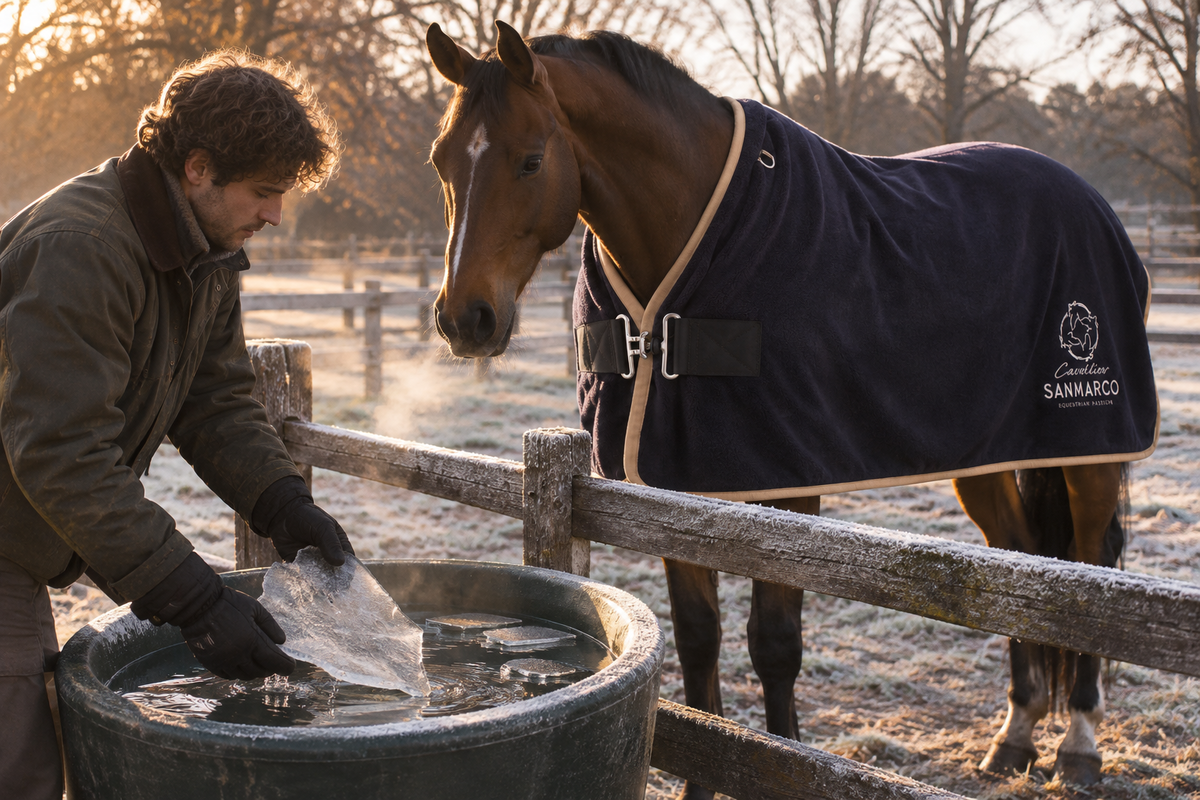
- Checking Troughs Only Once Per Day: In deep frost, a broken layer of surface ice will reform into a solid three-inch barrier within four to six hours. Troughs must be broken, cleared of ice sheets, and topped up at least twice to three times daily if not electrically heated.
- Neglecting Post-Ride Recovery: Even during cold schooling sessions, riders working hard in comfortable mid-layers often overlook equine hydration. Riders working in technical layers from our mens equestrian sweatshirts and jumpers stay warm and comfortable—ensure your horse receives the same careful post-ride recovery with a warm bucket of water immediately after cooling out under a fleece cooler.
- Ignoring Water Quality in Outdoor Paddock Troughs: Allowing outdoor troughs to collect decaying autumn leaves creates tannins that impart a bitter, astringent taste to the water, discouraging paddock drinking.
Diligent hydration management is the invisible shield of winter horse care. By tracking daily volume, tempering ice-cold buckets, and understanding your horse's unique metabolic needs, you ensure your equine athlete navigates the harshest winter months with optimum vitality, comfortable digestion, and sustained performance. Taking a few extra minutes each day to break ice, warm water, and monitor fluid intake is the quietest yet most profound commitment you can make to your horse's wellbeing turning cold-weather challenges into a seamless, healthy season in the saddle.