DESIGNED BY RIDERS, FOR RIDERS
How to Choose the Right Equestrian Competition Shirt: Fabric, Fit, and Collar Guide

Stepping into the competition ring demands absolute focus, seamless communication with your horse, and attire that supports athletic performance without distraction. While show coats and breeches often draw primary attention, your equestrian competition shirt forms the critical base layer between your skin and your outer jacket. A poorly engineered show shirt traps heat, bunches awkwardly beneath tailored sleeves, or restricts shoulder rotation over fences compromising both rider comfort and formal presentation.
Selecting the ideal horse riding competition shirt goes far beyond picking a crisp white garment. From bi-stretch micro-mesh weaves and concealed placket closures to discipline-specific collar silhouettes, modern competition tops are technical performance garments tailored to equestrian biomechanics. Whether browsing specialized silhouettes across our equestrian competition clothing collection or reviewing formal ring expectations in our competition polo shirts equestrian dress code guide, understanding core technical criteria ensures you invest in a shirt built for peak show-day execution.
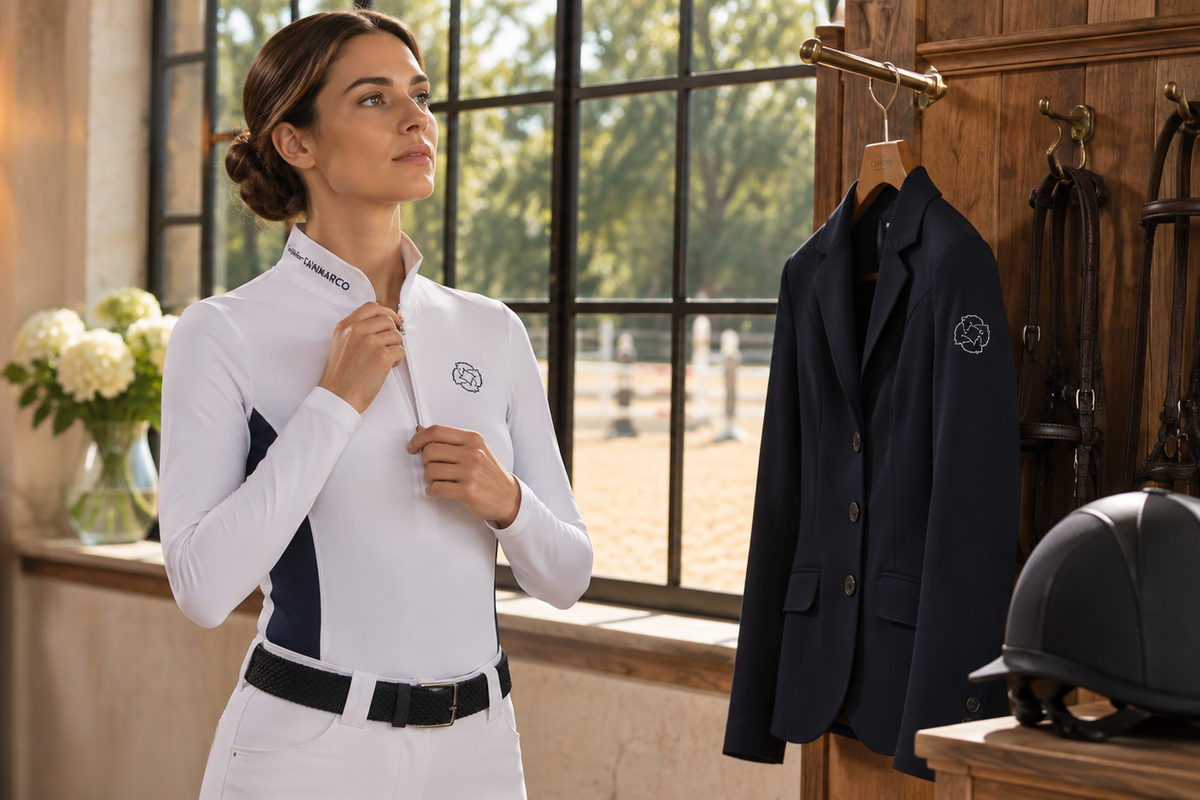
What Makes a Good Equestrian Competition Shirt?
An effective show shirt balances formal ring elegance with high-output athletic functionality. Because riders frequently warm up under intense sun before entering climate-controlled indoor arenas or windy outdoor rings, the garment must perform reliably across fluctuating conditions:
- Unrestricted Scapular and Arm Mobility: Jumping courses and extended dressage movements require wide shoulder rotation and independent arm carriage. Raglan sleeves or articulated gussets prevent fabric from pulling tight across the upper back when reaching forward over a fence.
- Smooth Layering Profile: A competition shirt must lie completely flat beneath a fitted show coat. Flatlock seams, thin cuffs, and streamlined front plackets eliminate bulk and prevent visible fabric ridges through stretch jacket panels.
- Rapid Moisture Evacuation: Nervous adrenaline combined with physical exertion accelerates perspiration. Technical show shirts pull moisture away from the chest and spine, keeping you dry and preventing post-round chills.
- Clean Formal Presentation: Crisp white collars, secure button or magnetic closures, and tie loops keep your neckline structured when jackets are worn—or when officials waive jackets during hot weather.
Competition Shirts vs Regular Riding Polos
While everyday training polos and competition show shirts may share a similar silhouette at first glance, their structural engineering serves entirely different purposes.
| Feature | Equestrian Competition Shirt | Regular Riding Polo |
|---|---|---|
| Collar Construction | Structured white mandarin/stand collar or formal tie collar with secure closures | Soft rib-knit fold-over collar designed for casual schooling |
| Fabric Weight & Stretch | Ultra-lightweight, high-elastane technical jersey with targeted mesh venting | Medium-weight pique knit or cotton-poly blend for daily durability |
| Under-Jacket Layering | Streamlined, close-to-body athletic cut with flat seams for zero bunching | Relaxed torso cut and thicker shoulder seams suited for standalone wear |
| Ring Compliance | Meets formal show attire standards across recognized competitions | Intended for daily training, clinics, and unrated schooling days |
Standard schooling polos prioritize abrasion resistance against daily barn chores and frequent washing, often incorporating thicker cotton-rich pique fabrics. Conversely, a dedicated equestrian show shirt uses finer-gauge, high-recovery synthetic weaves engineered to vanish seamlessly beneath a tailored competition jacket while presenting a crisp, formal white collar at the throat.
Short Sleeve vs Long Sleeve Competition Shirts
Choosing between short sleeve and long sleeve competition shirts depends on seasonal temperatures, regional show rules, and personal layering preferences:
- Short Sleeve Competition Polos: Ideal for spring and summer outdoor circuits, warm climates, and riders who dislike fabric friction inside fitted jacket sleeves. Short sleeves eliminate wrist bulk and maximize airflow around the forearms when jackets are waived in high heat.
- Long Sleeve Competition Shirts: Preferred for autumn and winter indoor shows, cooler climates, and formal disciplines where white cuffs must extend cleanly just past the show coat sleeve. Long-sleeve technical models also protect arms from UV exposure during summer warm-ups when crafted with ultra-breathable mesh underarm panels.
Because dress code regulations vary across national federations, show jumping tours, dressage levels, and eventing phases, always verify whether your specific competition rulebook permits short sleeves if show coats are excused due to hot weather.
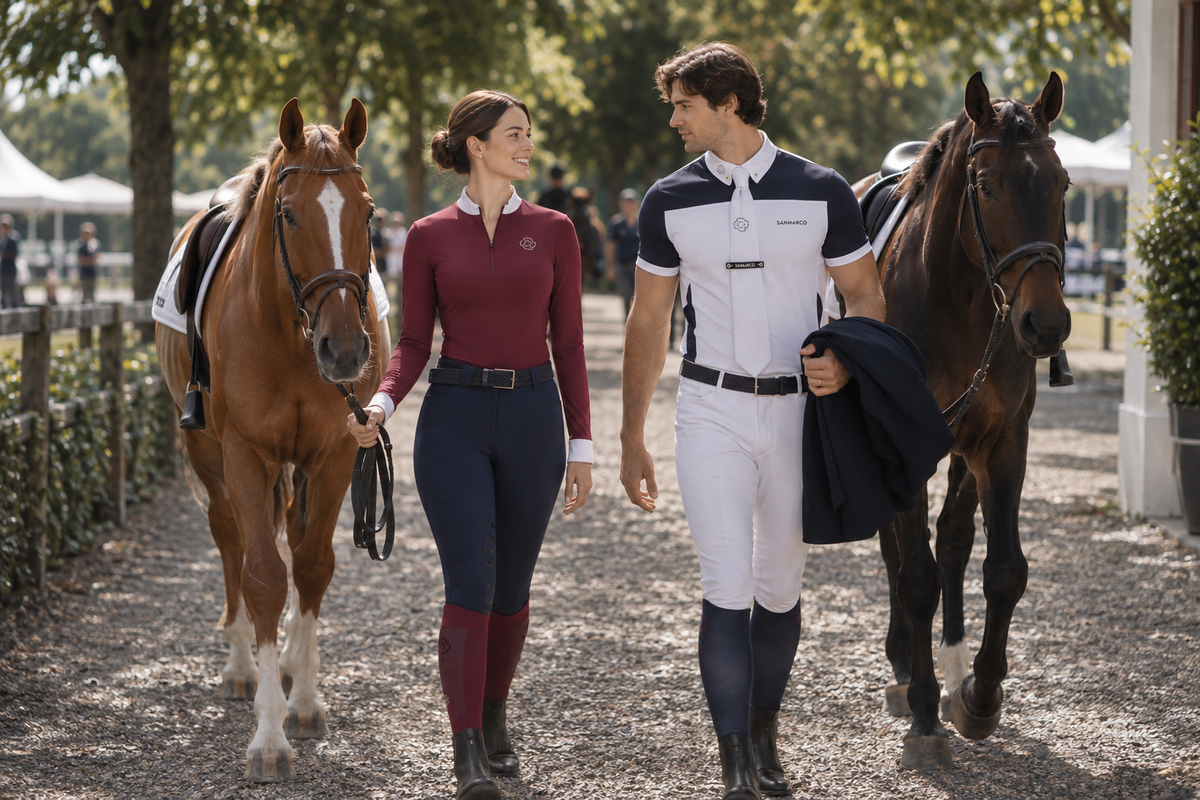
Best Fabrics for Comfort and Performance
Textile composition determines how a horse riding competition shirt regulates body temperature, retains opacity when damp, and moves with your torso:
- Polyamide-Elastane Micro-Jersey: A blend of approximately 75%–85% polyamide (nylon) and 15%–25% elastane delivers a cool, silky hand-feel, superior 4-way stretch recovery, and rapid drying speed compared to standard polyester.
- Laser-Perforated and Micro-Mesh Panels: Strategic mesh inserts placed along the underarms, upper back yoke, and side ribs create continuous air channels without compromising the opaque, formal appearance of the front bib and collar.
- UV-Protective and Anti-Odor Finishes: Tightly knitted technical yarns with integrated UPF protection shield skin during long outdoor warm-up sessions, while antimicrobial treatments prevent odor buildup across multi-day competitions.
- High-Opacity Front Bibs: White technical shirts must remain opaque even when wet from perspiration. Look for double-layered front plackets or high-density knit fronts that prevent show-through under bright arena lights.
How to Choose the Right Fit and Collar Style
Achieving a polished ring silhouette requires matching your shirt's cut and neckline to both your anatomy and your competition jacket.
Tailoring Differences
Women's vs Men's Cuts Women's competition shirts feature contoured waist shaping, curved hems that stay neatly tucked into high-waisted breeches, and narrower shoulder widths tailored to sit smoothly beneath sculpted female show coats. Men's competition shirts offer broader shoulder spans, straighter torso lines, and longer shirt tails designed to remain securely tucked during dynamic jumping rounds. In both lines, select an athletic, close-to-body fit that eliminates excess fabric folds under the arms without pulling across the chest buttons.
Collar Styles and Closures
- Mandarin / Stand-Up Collars: Featuring a neat white band collar with concealed snap buttons, quarter-zips, or magnetic plackets, these collars offer clean modern lines suited to show jumping and contemporary equestrian styling.
- Traditional Tie Collars: Designed with a slightly taller fold-over collar and a front keeper loop to hold a formal necktie or stock tie securely in place for dressage or traditional hunter/equitation classes.
- Inside-Collar Patterns: Subtle contrast prints or textured weaves on the inside of the collar add a quiet-luxury character when worn open during warm-up while keeping the exterior pure white in the ring.
Common Mistakes When Buying a Competition Shirt
Avoiding these frequent purchasing errors ensures your show shirt performs effortlessly from warm-up to prize-giving:
- Choosing Oversized Fits for Comfort: Buying a size up often creates uncomfortable fabric folds beneath fitted softshell jackets and causes the torso to untuck mid-round. Rely on 4-way stretch fabrics rather than excess volume for freedom of movement.
- Overlooking Cuff Thickness on Long Sleeves: Thick, stiff cuffs with bulky buttons press uncomfortably against the wrists beneath narrow show jacket sleeves. Opt for streamlined, single-button or stretch-knit cuffs.
- Ignoring Placket Security: Weak snap closures can pop open under chest tension during jumping efforts. Look for reinforced concealed snaps, durable quarter-zips, or high-strength hidden buttons.
- Assuming One Style Fits Every Discipline: Never assume a specific sleeve length or collar height is universally mandated; confirm your discipline's current dress code before investing in multiple shirts for the season.
Evaluating textile breathability, ergonomic seam placement, and collar structure transforms your competition shirt from a simple dress-code requirement into a true performance asset—allowing you to enter every ring composed, comfortable, and ready to ride at your best.

Related Post

Pony vs Horse Blankets: What’s the Difference in Fit, Sizing, and Protection?
Discover the differences between pony and horse blankets, including sizing, fit, materials, and seasonal protection to choose the right blanket for your equine.

Black Friday Equestrian Shopping Guide 2026: What to Prioritize for Rider and Horse
Plan your Black Friday equestrian shopping with smart tips on riding apparel, horse blankets, accessories, and essential gear worth adding to your wishlist.