 DESIGNED BY RIDERS, FOR RIDERS
Competition Polo Shirts: Decoding the Equestrian Dress Code

Stepping into the competition arena is as much a display of athletic discipline as it is a demonstration of formal tradition. While a rider's show jacket commands immediate attention, the garment worn beneath it carries substantial regulatory weight. The equestrian competition polo shirt serves as the architectural foundation of formal ring turnout, anchoring the rider’s neckwear, maintaining clean lines, and ensuring full compliance with national and international governing bodies.
Riders often underestimate how critical the collar structure, placket design, and sleeve length are until an uncomfortably hot day leads the ground jury to waive jackets, exposing every detail of the shirt. In these moments, your competition top transforms from a hidden underlayer into your primary presentation piece. Navigating federation dress codes, microclimate shifts, and technical textile weaves ensures your competition look remains impeccably poised under pressure.
By dissecting the functional mechanics, tailoring differences across rider profiles, and modern fabric blends of the competition polo, you can choose pieces that elevate both your ring presence and athletic output.
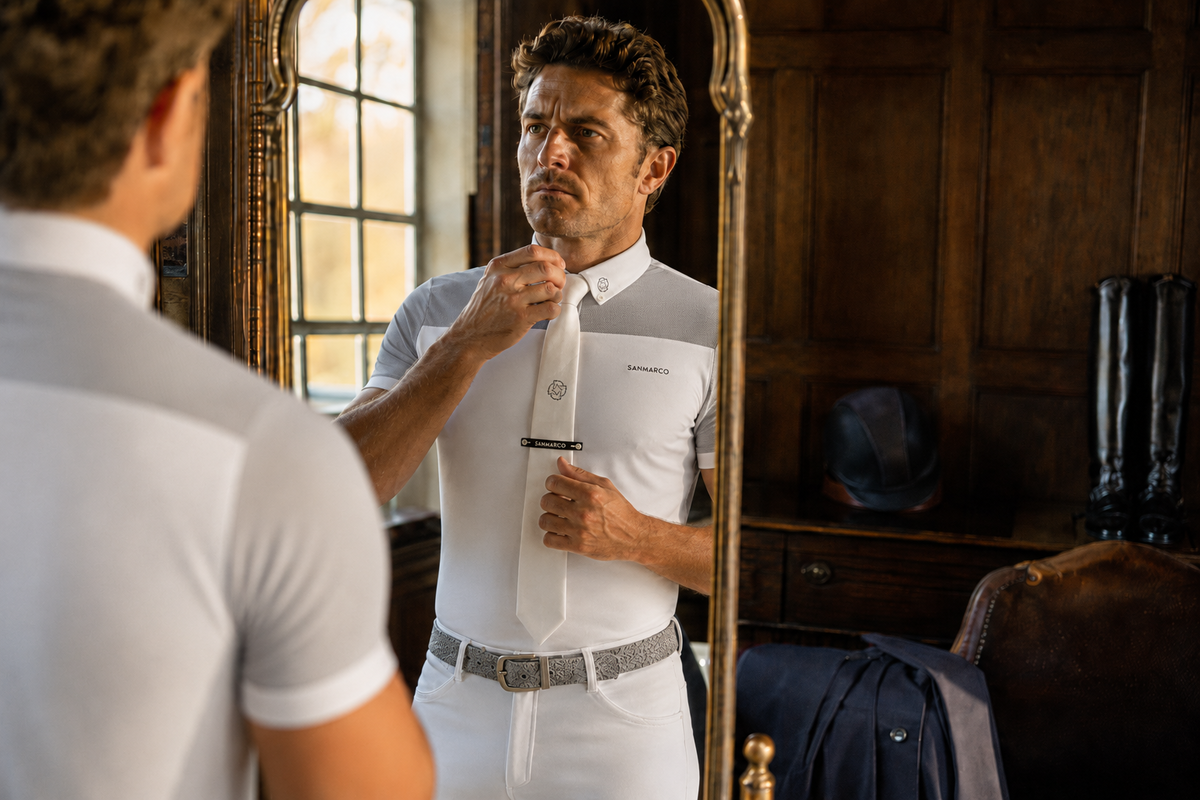
Why Does the Polo Collar Matter in Equestrian Competition?
The stand-up collar is not merely an aesthetic preference; it is a mandatory standard embedded across dressage, showjumping, and eventing rulebooks.
Historical Continuity and Ring Etiquette: Equestrian sport has evolved from military riding traditions, where high necklines and structured collars maintained military uniformity and shielded the neck. In modern dressage, the white stand-up collar frames the neck to provide judges with an unobstructed view of the rider’s head and shoulder alignment. It anchors the stock tie or tie securely, ensuring no gaps appear between the shirt and coat collar.
Jackets-Waived Scenarios: When temperatures climb and judges officially permit riders to compete without show coats, strict presentation rules apply. In the absence of a jacket, the competition shirt must have sleeves (long or short) and a structured collar closed cleanly at the throat. A loose, unbuttoned, or round-neck top violates ring protocol and can result in elimination.
Structural Rigidity Meets Comfort: Traditional cotton competition shirts featured stiff, scratchy poplin collars that restricted throat expansion during intense exertion. Modern engineering combines crisp, woven poplin collar bands with magnetic snaps, hidden zipper plackets, and soft micro-knit linings, delivering the sharp, upright silhouette demanded by officials without compromising airway freedom.
Long Sleeve vs. Short Sleeve: September's In-Between Season
The transition from late summer to early autumn introduces sharp temperature fluctuations between dawn warm-ups and midday competition classes, making sleeve selection a strategic decision.
The Versatility of Long-Sleeve Polos: Long-sleeve competition shirts offer superior all-season utility. In cooler September mornings, full-length sleeves prevent chills and keep arm muscles primed. When jackets are retained, the slick synthetic surface of a long-sleeve top prevents sweaty forearms from sticking to the silky inner lining of the coat. Furthermore, UV-protective long sleeves shield the arms during outdoor warm-ups before the jacket is donned.
The Breathability of Short-Sleeve Polos: Short-sleeve models excel during peak afternoon heats and indoor arenas where humidity builds rapidly. When selecting short sleeves, ensure the cuff sits flat against the bicep without gaping, maintaining a streamlined, tidy aesthetic under tailored coat sleeves.
Managing the Autumn Transition: September competitors frequently pack both variations in their show luggage. A smart competition plan involves wearing a breathable long-sleeve polo for early-morning horse inspections and schooling rounds, reserving an ultra-light short-sleeve polo for afternoon classes if the sun peaks.
Fabric Breakdown: Piqué, Technical Mesh, and Suplex Compared
Material science has modernized the competition polo, moving away from heavy natural fibers toward high-performance technical weaves engineered for athletic stamina.
Classic Cotton Piqué:
- Structure: Recognizable by its subtle honeycomb or waffle texture, cotton piqué offers a traditional, structured drape that holds its shape cleanly.
- Best Used For: Cool-weather showing and traditional clinics where maximum breathability is secondary to a substantial, classic hand-feel.
- Limitation: Retains moisture and becomes heavy when damp, making it less suitable for high-intensity jumping or humid summer show circuits.
Technical Micro-Mesh:
- Structure: Engineered from synthetic polyester-elastane blends featuring laser-perforated channels and microscopic venting pores.
- Best Used For: The torso, underarms, and back panels of competition shirts worn beneath heavy show coats.
- Advantage: Rapid capillary moisture transfer pulls perspiration away from the skin within seconds, promoting evaporative cooling under intense physical stress.
Performance Suplex and Polyamide Blends:
- Structure: An ultra-fine, tightly knit microfiber that replicates the soft touch of cotton while offering medical-grade elasticity and opacity.
- Best Used For: Form-fitting competition shirts requiring completely opaque coverage, zero chafing, and four-way athletic rebound.
- Advantage: Highly resistant to snags, pill-resistant, and maintains vibrant white brightness even after frequent washing throughout a long season.
Men's, Women's, and Junior Polos: Cut Differences That Matter
A proper competition polo must accommodate distinct physiological contours and discipline requirements. The differences between gender and youth cuts go far deeper than aesthetics.
Men's Competition Polos: Male riders require broader shoulder cuts, wider armholes to accommodate shoulder rotation over fences, and a longer torso drop. The collar placket is cut wider to accommodate a formal riding tie or clip, and the neck circumference must sit flush against the throat without choking when buttoned up. To explore sharp tailoring, crisp collars, and breathable athletic fabrics engineered for male athletes, discover our collection of mens equestrian competition polos shirts.
Women's Competition Polos: Female silhouettes demand tailored waist shaping, darting around the bust to prevent fabric gaping across the placket, and seamless finishes that stay invisible beneath contoured show jackets. Collar designs frequently feature subtle magnetic closures, delicate crystal snaps, or hidden zip plackets that transition easily between formal show ties and standalone mandarin collar looks. To browse sculpted fits, micro-mesh panels, and elegant show tops, explore our complete womens equestrian competition polos shirts range.
Junior Competition Polos: Youth riders require garments that balance regulatory decorum with tactile comfort. Stiff collars and restrictive seams can distract a young competitor. Junior cuts feature ultra-stretch side panels, softer collar bands that avoid throat irritation, and extra-long hemlines that stay firmly tucked inside pony-sized breeches during active ring rounds. To outfit younger competitors in federations-compliant comfort, view our dedicated selection of junior equestrian competition polos shirts.
FEI-Compliant vs. Training Polos: Knowing the Difference
| Feature | FEI Competition Show Shirt | Everyday Training Polo |
|---|---|---|
| Collar Style | Stand-up white collar (mandarin or fold-over) | Ribbed fold-down casual polo collar |
| Collar Color | Mandatory white or off-white at the neck | Any color, pattern, or contrast trim |
| Sleeve Requirements | Sleeves required (short or long); sleeveless banned | Sleeveless, cap sleeves, or long sleeves |
| Branding & Logos | Strictly limited in size (e.g., maximum 3 cm² on collar) | Large graphic prints, chest logos, or slogan details |
| Tie / Plastron Fit | Loop or tailored placket for tie/stock tie integration | Flat placket, no tie integration |
| Fabric Appearance | Crisp, solid, and opaque when jacket is removed | Casual heathered textures, relaxed drape |
How to Style Your Competition Polo for the Complete Look
Achieving a polished, judge-ready presentation requires thoughtful integration between your polo and the rest of your competition kit.
Tucking and Hemline Management: Never leave a competition polo untucked, even in the warm-up ring. Tuck the shirt smoothly into high-waisted white or beige breeches, pulling gently at the side seams to eliminate excess fabric folds over the waistband. Fasten with a classic leather belt featuring a subtle silver, brass, or gunmetal buckle.
Neckwear Integration: In dressage disciplines, ensure your stock tie sits firmly centered over the placket, secured with a horizontal pin that does not tilt. In jumping and hunter classes where a tie is worn, tuck the tie tail cleanly beneath the collar placket so it cannot whip in the wind during a course.
Coordinating Collar Accents with Jacket Details: If your competition polo features subtle silver piping, white embroidery, or gunmetal snaps along the collar edge, match these metal accents to the buttons or trims of your competition jacket and helmet details for an elevated, harmonious ensemble.
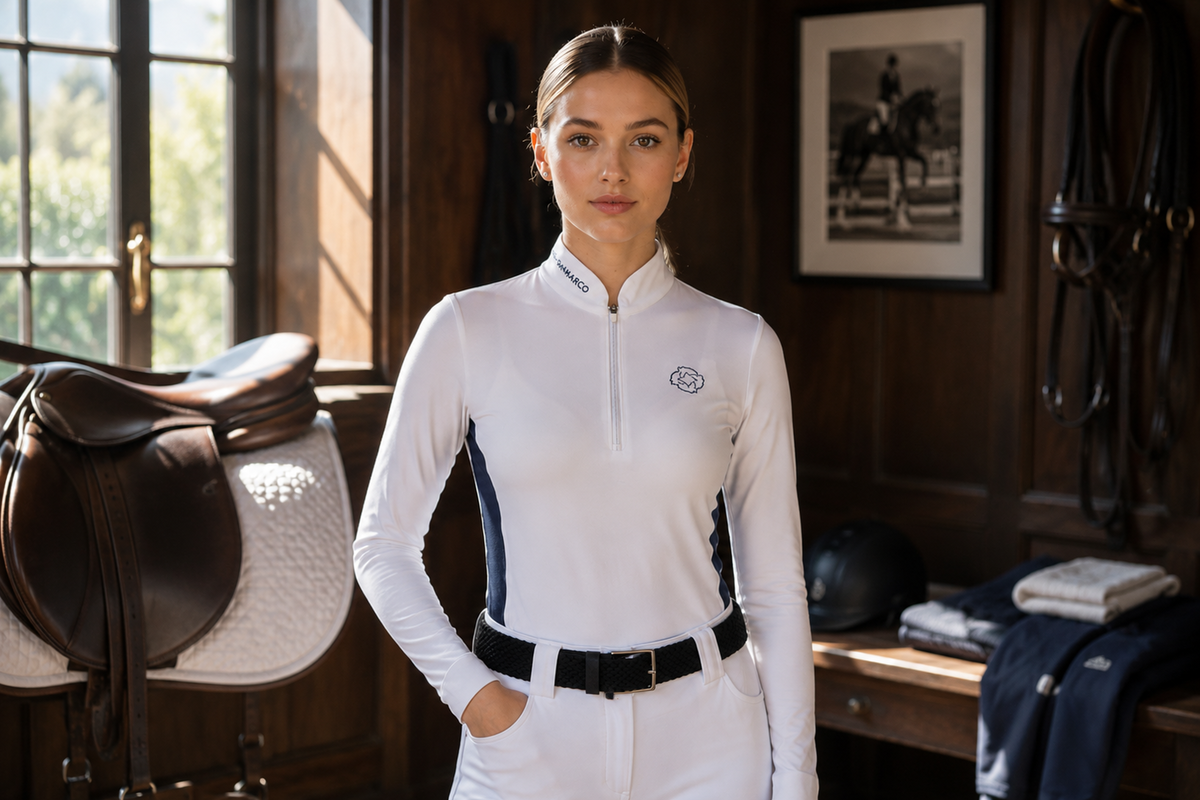
Setting Your Ring Appearance Up for Success
Investing in a high-caliber competition polo shirt ensures you enter every class with complete peace of mind, fully aligned with regulatory expectations and physically supported by advanced textiles. When your collar stays crisp, your core remains dry, and your upper body moves with unhindered freedom, you can channel all your focus toward your horse, your lines, and your time.
As you assemble your competition kit for the upcoming season, audit your shirt options. Do you have reliable long-sleeve layers for crisp autumn mornings and breathable mesh tops for high-heat afternoons? Choosing shirts tailored specifically to your discipline and body mechanics guarantees comfort, poise, and regulatory compliance every time you step into the ring.
By anchoring your show wardrobe with expertly tailored competition polos, you honor the noble traditions of equestrian sport while capitalizing on the pinnacle of modern athletic performance.
Editor’s Note: To maintain the pristine brightness of white competition collars and cuffs, pretreat collar bands with an oxygen-based stain remover immediately after showing. Avoid chlorine bleach, which damages synthetic elastane fibers and causes white technical fabrics to yellow over time.


Related Post

Junior Rider's September Wardrobe Guide: Elevating the Autumn Season
A new riding season starts in September and so does your child's wardrobe refresh. Discover how to build a complete junior equestrian look with competition polos, base layers, and breeches for the autumn season.

Back to Riding: Your September Layering Checklist for the New Season
After a summer break, returning to the stable requires a full wardrobe update. Discover how to layer base layers, breeches, and outerwear for the September riding season.


